After Further Review … As a kid you couldn’t get me off the playground until after dark. Well, there was one exception. If 6:00pm (dinner time at our house) occurred before it got dark, I had to be home. Mom was in charge. Dad was usually on my side, except went I went against “the rules.” I grew up on playgrounds, fields, stadiums, and have always felt very much at home there.
Dad helped nurture my feelings of the comfortableness of fields, courts and stadiums; and through sports, taught me a lot about people and relationships. Dad was sitting in the stands at one of my high school baseball games when I happened to say a word (it was friendly) to an opposing first basemen, I lost my concentration and was “picked off” – “Out,” said the umpire.
“Don’t talk to your opponents during a game,” my Dad scolded. “It’s ok to be pleasant, friendly, and sportsmanlike, but games are not for conversation.” Dad made his point. Never happened again. Which brings me to today’s athletes who “trash talk” to – or at - opponents.
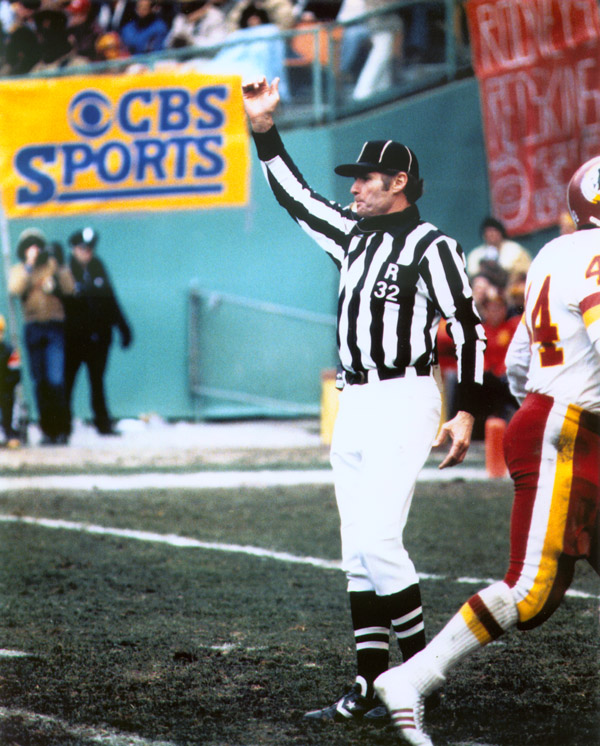
As a referee on the NFL field for 31 years, I heard it all too often. With my father’s message ringing in my ears (it still does even today), I always tried to stop, curtail, reduce trash talking between opponents. To me, it adds NO value to the game. Yet, in today’s sports world, especially at the professional level, it happens on a regular basis.
Recently watching a sports talk show, one of the panelists said, “Trash talking helps the game.” The panelist went on to say that he “wished women in the WNBA would do more of it.” How does it help the game? Does it make your opponent play better? If so, that’s not a good thing. On the other hand, does it make an opponent play worse?
Then again, how far does one take trash talking? Are there boundaries? Racial slurs ok? Many of them start fights. Is fisticuffs part of sports? In hockey – well, don’t get me started.
Do you go to a game to see/hear players trash talk?
Most dictionaries describe the word “trash” as “junk,” “garbage,” and “litter;” or to “attack” or “criticize severely.” What value does that add to any game? Further, what example does it send to Little Leaguers, high school or college players who see their “heroes (?)” trash talking?
Will (does) trash talk help or hurt the game?
Friday, January 29, 2010


Friday, January 15, 2010
“Coming up next … Helping Your Teammates” - #264 – January 18, 2010
After Further Review … “I want to apologize to the National Basketball Association if I ticked anybody off by us having fun,” Gilbert Arenas, star player of the Washington Wizards, is reported to have said following his actions in front of the crowd prior a game in Philadelphia. Arenas purportedly held both hands in the shape of guns with his thumbs locked, and then faked shooting at his teammates. This incident followed the report that he had brought a firearm into the Wizards locker room and brandished the weapon towards a teammate in a “playful way.” Arenas compounded this by posting it on his Twitter account.
Not only is Arenas’ action detestable in this day and age of barbarous gun use, but please note that the Washington Wizards recently changed its name from the Washington Bullets because of the violent connotation in today’s world. Arenas brought a real weapon into a professional sports locker room? As a joke? Where did Arenas leave his common sense, his understanding of the law, let alone his disregard of NBA rules? Not only has Commissioner David Stern suspended Arenas, but the NBA has launched an investigation, along with the Office of the United States Attorney in the District of Columbia, and the Metropolitan Police Department. Arenas has been charged with a felony.
Ironic; since this is the day of celebration for Dr. Martin Luther King, Jr., a chief spokesman for non-violence. In addition to apologizing to the NBA, Arenas needs to make amends to Dr. King’s memory as well as Arenas’ family and fans.
Do today’s pro athletes carry guns? Who? How many? Why? Well, as one person close to pro athletes said, “If the brothers know you’re packing, they’ll leave you alone.” Why do high-profile athletes associate with, hang around, and/or visit places where bad influences gather? Did we not learn anything from Michael Vick? Or Plaxico Burress? Or Jayson Williams?
“It’s sad,” said one of Arenas’ Wizards teammates, “We’re a family and it hurts.” Sir, if you’re a family, step up and help a teammate, when his common sense falters. Where was Arenas’ agent with advice/concern for avoiding these situations? How about Arenas’ family; did they not see this coming? And what does Arenas’ “star status” say to young fans that admire his skills? While fans often want to emulate what their “heroes” do, they need to observe their behavior off the court as well!
Will you be watchful of your family and teammates who may lose their way?
Not only is Arenas’ action detestable in this day and age of barbarous gun use, but please note that the Washington Wizards recently changed its name from the Washington Bullets because of the violent connotation in today’s world. Arenas brought a real weapon into a professional sports locker room? As a joke? Where did Arenas leave his common sense, his understanding of the law, let alone his disregard of NBA rules? Not only has Commissioner David Stern suspended Arenas, but the NBA has launched an investigation, along with the Office of the United States Attorney in the District of Columbia, and the Metropolitan Police Department. Arenas has been charged with a felony.
Ironic; since this is the day of celebration for Dr. Martin Luther King, Jr., a chief spokesman for non-violence. In addition to apologizing to the NBA, Arenas needs to make amends to Dr. King’s memory as well as Arenas’ family and fans.
Do today’s pro athletes carry guns? Who? How many? Why? Well, as one person close to pro athletes said, “If the brothers know you’re packing, they’ll leave you alone.” Why do high-profile athletes associate with, hang around, and/or visit places where bad influences gather? Did we not learn anything from Michael Vick? Or Plaxico Burress? Or Jayson Williams?
“It’s sad,” said one of Arenas’ Wizards teammates, “We’re a family and it hurts.” Sir, if you’re a family, step up and help a teammate, when his common sense falters. Where was Arenas’ agent with advice/concern for avoiding these situations? How about Arenas’ family; did they not see this coming? And what does Arenas’ “star status” say to young fans that admire his skills? While fans often want to emulate what their “heroes” do, they need to observe their behavior off the court as well!
Will you be watchful of your family and teammates who may lose their way?
Monday, January 11, 2010
Tunney Side of Sports; “Coming up next … Coach vs. Teacher” - #263 – January 11, 2010
After Further Review … “Nothing is ever so bad it can’t be made worse by firing the Coach,” wrote former syndicated sports columnist Jim Murray. Murray, arguably the greatest ever, was able to succinctly capture the essence of a sports story with humor and satire. What brings the Murray quote to mind is that this is the time of year when football coaches are “separated” from their jobs.
So, what IS the role of a coach? At the Little League and high school levels, a coach’s focus needs to be on TEACHING. T.E.A.M.s certainly should “play to win the game,” as Coach Herm Edwards says in my book “It’s the Will, Not the Skill.” However, teaching must come first. My belief is: a coach helps you become a better player and a better person. Coaching and teaching are synonymous.
As a former high school teacher and administrator, I believe that IS the role of a teacher – to help students become better people as well as better learners. What if a teacher looked at students as “players;” e.g. some are quarterbacks, some are linemen, some are wide receivers – each student having different strengths? Classroom teachers, then, do the same thing as coaches do on the field, they develop each student’s special talents.
Should college and professional coaches be teachers as well? One former NFL coach told me, “In the NFL, you don’t get paid to coach/teach; you get paid to win.” Can a pro coach do both – teach and win? I have known NFL coaches (with whom I had the pleasure of being on the field) who did both -- e.g. Lombardi, Landry, Walsh, Shula, Madden and Edwards. Players always spoke highly of their learning experiences both on and off the field, and appreciated the efforts their coaches made in helping them become “better people, as well as better players.”
Good coaches do that. However, teaching too often takes a back seat to the pressure of winning. College coaching, for example, has become a race to be number 1. Indeed, some college coaches let their desire (ego?) to win get in the way of what their real purpose must be. However, given the choice, good coaches place teaching ahead of winning-at-all-costs. Unfortunately, economics drives that winning-at-all-costs attitude. Too bad!
Will you support those teachers/coaches who strive to help their students/players become the best they can be both on and off the field?
So, what IS the role of a coach? At the Little League and high school levels, a coach’s focus needs to be on TEACHING. T.E.A.M.s certainly should “play to win the game,” as Coach Herm Edwards says in my book “It’s the Will, Not the Skill.” However, teaching must come first. My belief is: a coach helps you become a better player and a better person. Coaching and teaching are synonymous.
As a former high school teacher and administrator, I believe that IS the role of a teacher – to help students become better people as well as better learners. What if a teacher looked at students as “players;” e.g. some are quarterbacks, some are linemen, some are wide receivers – each student having different strengths? Classroom teachers, then, do the same thing as coaches do on the field, they develop each student’s special talents.
Should college and professional coaches be teachers as well? One former NFL coach told me, “In the NFL, you don’t get paid to coach/teach; you get paid to win.” Can a pro coach do both – teach and win? I have known NFL coaches (with whom I had the pleasure of being on the field) who did both -- e.g. Lombardi, Landry, Walsh, Shula, Madden and Edwards. Players always spoke highly of their learning experiences both on and off the field, and appreciated the efforts their coaches made in helping them become “better people, as well as better players.”
Good coaches do that. However, teaching too often takes a back seat to the pressure of winning. College coaching, for example, has become a race to be number 1. Indeed, some college coaches let their desire (ego?) to win get in the way of what their real purpose must be. However, given the choice, good coaches place teaching ahead of winning-at-all-costs. Unfortunately, economics drives that winning-at-all-costs attitude. Too bad!
Will you support those teachers/coaches who strive to help their students/players become the best they can be both on and off the field?
Sunday, December 20, 2009
Tunney Side of Sports; “Coming up next … Knowing what you stand for!”- #260, December 21, 2009
After Further Review … On My Honor, I Will is a wonderful book just released by my friend and colleague Randy Pennington. The subtitle is “The journey to integrity–driven leadership.” It makes a wonderful present for those involved in leadership, as well as anyone who has a responsibility to and/or for others, e.g. coaches, teachers, parents.
The title reminds me first and foremost of the Boy Scout oath that I said often as a scout (Troop #9, Alhambra, California). At that young age, perhaps we really never knew how significant that oath would mean to us later in life. We faithfully recited it, and, of course, intended to practice it as scouts, but the real value may not have sunk in then.
Unfortunately, former NBA referee Tim Donaghy never was a Boy Scout and never learned this oath; or if he did, it got lost somewhere in his adult life. Donaghy, you will recall, is the NBA referee who bet on NBA games in which he officiated, as well as provided inside information to gamblers so that they could place bets based on his information. Donaghy pleaded guilty and served a 15-month sentence (should have been 15 years!) for felony wire fraud charges. Donaghy, out walking amongst us now, has recently released HIS book (ghost-written?) called Personal Foul – and it is certainly a “personal foul.” His accusations and impeachment of fellow officials is disgraceful. A rat turns on others to save himself. Further, Donaghy incriminates coaches, players and supervisors with accusations that often are not substantiated by fact.
With my 4 decades of officiating, this crime hit me right in the pit of my stomach. Ouch! Not only would I never even think of such debauchery, but never have witnessed it with any of my officiating colleagues.
Donaghy claims “addiction” (to gambling) as a great part of his problem. Hogwash! While some may have “gambling addictions,” a sense of honor, justice and just do the right thing would/should overtake such compulsions. The words “greed,” and “easy money,” are more often the case rather than addiction. Donaghy crossed a line he never should have been near.
In On My Honor, I Will, author Pennington discusses several characteristics that define integrity, and then asks the reader to rate (1-5 scale) him/herself. Here are just a couple: “I know what I stand for” – “I make decisions based on what’s right for all parties.” Wonder how Donaghy would rate himself on those traits?
Will you “On Your Honor” practice good for others?
The title reminds me first and foremost of the Boy Scout oath that I said often as a scout (Troop #9, Alhambra, California). At that young age, perhaps we really never knew how significant that oath would mean to us later in life. We faithfully recited it, and, of course, intended to practice it as scouts, but the real value may not have sunk in then.
Unfortunately, former NBA referee Tim Donaghy never was a Boy Scout and never learned this oath; or if he did, it got lost somewhere in his adult life. Donaghy, you will recall, is the NBA referee who bet on NBA games in which he officiated, as well as provided inside information to gamblers so that they could place bets based on his information. Donaghy pleaded guilty and served a 15-month sentence (should have been 15 years!) for felony wire fraud charges. Donaghy, out walking amongst us now, has recently released HIS book (ghost-written?) called Personal Foul – and it is certainly a “personal foul.” His accusations and impeachment of fellow officials is disgraceful. A rat turns on others to save himself. Further, Donaghy incriminates coaches, players and supervisors with accusations that often are not substantiated by fact.
With my 4 decades of officiating, this crime hit me right in the pit of my stomach. Ouch! Not only would I never even think of such debauchery, but never have witnessed it with any of my officiating colleagues.
Donaghy claims “addiction” (to gambling) as a great part of his problem. Hogwash! While some may have “gambling addictions,” a sense of honor, justice and just do the right thing would/should overtake such compulsions. The words “greed,” and “easy money,” are more often the case rather than addiction. Donaghy crossed a line he never should have been near.
In On My Honor, I Will, author Pennington discusses several characteristics that define integrity, and then asks the reader to rate (1-5 scale) him/herself. Here are just a couple: “I know what I stand for” – “I make decisions based on what’s right for all parties.” Wonder how Donaghy would rate himself on those traits?
Will you “On Your Honor” practice good for others?
Sunday, December 13, 2009
Tunney Side of Sports; “Coming up next … What defines a Sportsman” #259, December 14, 2009
“Everything he does has such grace about it,” said Oakland A’s general manager Billy Beane about the New York Yankees shortstop Derek Jeter. Jeter was recently named 2009 Sportsman of the Year by Sports Illustrated. SI writer Tom Verducci began his story on Jeter this way: “Every sunrise is a fresh shot at victory – every day an invitation to compete with that same smile and delight of that (little) boy in the mirror that looked back at him …”.
As a kid, I was a Yankees fan listening to their games on the radio. Major League teams had not moved west of St. Louis, so Red Ruffing, Babe Ruth, Lou Gehrig, et al, had become “my team.” I didn’t get to know them as we do about sports stars today, i.e., their ups, their downs, the ins & outs of their off-field personalities – which is probably too much information anyway.
There have been many other great Yankee players that I admired, but when I watch Jeter play, what strikes me first and foremost is his smile. He looks like he’s having fun playing baseball by treating every day, every game, and every batting practice like he’s happy just to be there.
One of his coaches said, “Players gravitate toward him. He is well-liked, has a great disposition, a good sense of humor and, of course, that smile, but when it comes to working, that grin melts into a serious look.” Is there any part of the above that prevents any of us from adopting that kind of behavior?
Certainly credit must go to his mother (Dorothy) and father (Charles) for instilling in him the values of integrity, humility and respect for others. Maybe this example expresses it: Dorothy and Charles have been in the Yankees clubhouse only once, and that was back in 1995 when Derek first reached the big leagues. His parents were reluctant to go there, saying “this is where you work.” Proud, you bet! But respectful of him and his place of work. Is that so hard to do? That behavior transmitted their values to their son. We all can do that!
What Jeter dislikes most is an attitude of “not caring.” He believes that you must care about winning. Having fun includes an attitude of caring about winning. That’s a passion that all athletes need to follow.
Will you practice the Jeter values in everything you do?
As a kid, I was a Yankees fan listening to their games on the radio. Major League teams had not moved west of St. Louis, so Red Ruffing, Babe Ruth, Lou Gehrig, et al, had become “my team.” I didn’t get to know them as we do about sports stars today, i.e., their ups, their downs, the ins & outs of their off-field personalities – which is probably too much information anyway.
There have been many other great Yankee players that I admired, but when I watch Jeter play, what strikes me first and foremost is his smile. He looks like he’s having fun playing baseball by treating every day, every game, and every batting practice like he’s happy just to be there.
One of his coaches said, “Players gravitate toward him. He is well-liked, has a great disposition, a good sense of humor and, of course, that smile, but when it comes to working, that grin melts into a serious look.” Is there any part of the above that prevents any of us from adopting that kind of behavior?
Certainly credit must go to his mother (Dorothy) and father (Charles) for instilling in him the values of integrity, humility and respect for others. Maybe this example expresses it: Dorothy and Charles have been in the Yankees clubhouse only once, and that was back in 1995 when Derek first reached the big leagues. His parents were reluctant to go there, saying “this is where you work.” Proud, you bet! But respectful of him and his place of work. Is that so hard to do? That behavior transmitted their values to their son. We all can do that!
What Jeter dislikes most is an attitude of “not caring.” He believes that you must care about winning. Having fun includes an attitude of caring about winning. That’s a passion that all athletes need to follow.
Will you practice the Jeter values in everything you do?
Saturday, November 28, 2009
“Coming up next … Plan your successes with SRO!” #257, Nov. 30, 2009
After Further Review … As we prepare for closure of 2009, it’s important to reflect not only what GOOD came our way, but what plans/goals we have for 2010. Far too often we tend to remember the “bad” rather than the “good.” Why is that? What is it in our mindset that leads us toward the negative, rather than the positive?
Well, for one thing, the news permeates our daily lives, whether it be television, internet or newspaper; it too often features the bad and the ugly. How can we direct (i.e. control) our thinking towards positive, enlightening opportunities? How ‘bout count your blessings!
Sports provides us with an example. The hue and cry of sports fans who have ended a season of disappointment can be heard to say, “Wait’ll next year!” That puts a positive spin on a frustrating season, looking ahead for better things to come. Here’s a thought to make that a possibility – the word is DETERMINATION.
You can search dictionaries and thesauruses available for definitions; however, what it really comes down to is your firmness of purpose. They tell this story of Miami Head Coach Don Shula, whose Dolphins team lost to the Dallas Cowboys in Super Bowl VI. Coach Shula, disappointed at his team’s 24-3 loss, said to his players in the locker room immediately after that game, “Gentleman, we start today preparing for next season.” The next (1972) season, Shula’s Dolphins never lost a game (17-0)! Then, those Dolphins won Super Bowl VII, followed by winning Super Bowl VIII.
Using a football analogy for singleness of purpose, here’s a way to accomplish wait’ll next year. The idea revolves around setting a goal, as Coach Shula did. In football, the goal of the offensive team is to score a touchdown. In order to accomplish this, football gives that team 4 downs. If a team uses those downs successfully to gain 10 yards, football rewards them with another 4 downs. In goal-setting terms, we call those short range objectives (SRO).
As you reflect on 2009, did you try to go for a touchdown every time or did you build your successes on SRO? Now is the time to study what you did well this year, analyzing how to build your plan of success. Teams who didn’t have a great 2009 season are now dissecting their plan that may have caused failure. Then, they set a plan for success based upon SRO.
Will you reflect on the good you did in 2009?
NOTE: A huge THANK YOU to each and every one of you who took time to vote for me as a nominee for the Pro Football Hall of Fame. The Pro Football Hall of Fame Committee has selected its top 25 to be voted on for the class of 2010. I was not selected, however, as I said above, “Wait’ll next year!” Indeed, I do count my blessings.
To learn more about Jim Tunney, or if your organization would like to secure Jim as a speaker, please visit www.tunneysideofsports.com and click on Jim Tunney
www.twitter.com/jimtunney
Well, for one thing, the news permeates our daily lives, whether it be television, internet or newspaper; it too often features the bad and the ugly. How can we direct (i.e. control) our thinking towards positive, enlightening opportunities? How ‘bout count your blessings!
Sports provides us with an example. The hue and cry of sports fans who have ended a season of disappointment can be heard to say, “Wait’ll next year!” That puts a positive spin on a frustrating season, looking ahead for better things to come. Here’s a thought to make that a possibility – the word is DETERMINATION.
You can search dictionaries and thesauruses available for definitions; however, what it really comes down to is your firmness of purpose. They tell this story of Miami Head Coach Don Shula, whose Dolphins team lost to the Dallas Cowboys in Super Bowl VI. Coach Shula, disappointed at his team’s 24-3 loss, said to his players in the locker room immediately after that game, “Gentleman, we start today preparing for next season.” The next (1972) season, Shula’s Dolphins never lost a game (17-0)! Then, those Dolphins won Super Bowl VII, followed by winning Super Bowl VIII.
Using a football analogy for singleness of purpose, here’s a way to accomplish wait’ll next year. The idea revolves around setting a goal, as Coach Shula did. In football, the goal of the offensive team is to score a touchdown. In order to accomplish this, football gives that team 4 downs. If a team uses those downs successfully to gain 10 yards, football rewards them with another 4 downs. In goal-setting terms, we call those short range objectives (SRO).
As you reflect on 2009, did you try to go for a touchdown every time or did you build your successes on SRO? Now is the time to study what you did well this year, analyzing how to build your plan of success. Teams who didn’t have a great 2009 season are now dissecting their plan that may have caused failure. Then, they set a plan for success based upon SRO.
Will you reflect on the good you did in 2009?
NOTE: A huge THANK YOU to each and every one of you who took time to vote for me as a nominee for the Pro Football Hall of Fame. The Pro Football Hall of Fame Committee has selected its top 25 to be voted on for the class of 2010. I was not selected, however, as I said above, “Wait’ll next year!” Indeed, I do count my blessings.
To learn more about Jim Tunney, or if your organization would like to secure Jim as a speaker, please visit www.tunneysideofsports.com and click on Jim Tunney
www.twitter.com/jimtunney
Sunday, November 22, 2009
Tunney Side of Sports; “Coming up next … Every day is a time for giving.” #256, Nov. 23, 2009
After Further Review … It has always seemed to me that the celebration of the American holiday THANKSGIVING ought to be Thanksgiving EVERY day, not just the 4th Thursday in November. A couple of old saws come to mind.
First, are the words my father taught me: “Count your blessings.” Having spent my early years in the Great Depression (1930’s), our family didn’t have much money. Oh, we weren’t poor, but whatever money we had was earned (key word: earned) through the many jobs my father, as well as each of us in our family had, we were indeed, grateful for what we had.
The second is the philosophy I first heard expressed by my friend and colleague, Dr. Nido Qubein – now President of High Point University in North Carolina. Dr. Qubein said, “We should give without remembering; receive without forgetting.” That philosophy has served me well through many years as an educator and sports official. As an educator (see www.JimTunney.com), I had decades of opportunity to be part of thousands of young people’s lives. Hopefully, I was able to transmit to these young people the importance of giving.
Being involved in sports all my life (at age 12 my ambition was to be a coach), I learned many things. Number one: it’s not about me. As a player, it was about the teams I was fortunate enough to play on – thus the acronym T.E.A.M. (Together Everyone Accomplishes More). That same philosophy held for me as an NFL official. As crew chief (i.e. referee in the “white hat”), 24 of my 31 NFL years, it was the crew of 7 of us that became a family-on-the-field to serve the game of football better. My question after every one of my 500+ NFL games was “Did I leave the game today better than I found it?”
What I see and hear from some of today’s sport-stars is: “I told y’all, I’m not putting any more on my back;” meaning I am avoiding responsibility to help my T.E.A.M. more. It betrays the philosophy of giving and helping others. As Herm Edwards, former coach of two NFL teams, has always said, “Playing in professional sports is a privilege, not a right.” We need more of today’s players adopting the Edwards code.
Will you give without remembering and receive without forgetting?
Note: Many feel it’s time to elect an on-field game official to the Pro Football (NFL) Hall of Fame. To vote for nominee Jim Tunney, go to http://www.fanschoice.com/vote.aspx - scroll through nominee names to find TUNNEY; click on TUNNEY; drag and drop into voting area. You can vote once each day! Last day to vote is Saturday, November 28, 2009.
To learn more about Jim Tunney, or if your organization would like to secure Jim as a speaker, please visit www.tunneysideofsports.com and click on Jim Tunney www.twitter.com/jimtunney
First, are the words my father taught me: “Count your blessings.” Having spent my early years in the Great Depression (1930’s), our family didn’t have much money. Oh, we weren’t poor, but whatever money we had was earned (key word: earned) through the many jobs my father, as well as each of us in our family had, we were indeed, grateful for what we had.
The second is the philosophy I first heard expressed by my friend and colleague, Dr. Nido Qubein – now President of High Point University in North Carolina. Dr. Qubein said, “We should give without remembering; receive without forgetting.” That philosophy has served me well through many years as an educator and sports official. As an educator (see www.JimTunney.com), I had decades of opportunity to be part of thousands of young people’s lives. Hopefully, I was able to transmit to these young people the importance of giving.
Being involved in sports all my life (at age 12 my ambition was to be a coach), I learned many things. Number one: it’s not about me. As a player, it was about the teams I was fortunate enough to play on – thus the acronym T.E.A.M. (Together Everyone Accomplishes More). That same philosophy held for me as an NFL official. As crew chief (i.e. referee in the “white hat”), 24 of my 31 NFL years, it was the crew of 7 of us that became a family-on-the-field to serve the game of football better. My question after every one of my 500+ NFL games was “Did I leave the game today better than I found it?”
What I see and hear from some of today’s sport-stars is: “I told y’all, I’m not putting any more on my back;” meaning I am avoiding responsibility to help my T.E.A.M. more. It betrays the philosophy of giving and helping others. As Herm Edwards, former coach of two NFL teams, has always said, “Playing in professional sports is a privilege, not a right.” We need more of today’s players adopting the Edwards code.
Will you give without remembering and receive without forgetting?
Note: Many feel it’s time to elect an on-field game official to the Pro Football (NFL) Hall of Fame. To vote for nominee Jim Tunney, go to http://www.fanschoice.com/vote.aspx - scroll through nominee names to find TUNNEY; click on TUNNEY; drag and drop into voting area. You can vote once each day! Last day to vote is Saturday, November 28, 2009.
To learn more about Jim Tunney, or if your organization would like to secure Jim as a speaker, please visit www.tunneysideofsports.com and click on Jim Tunney www.twitter.com/jimtunney
Friday, November 13, 2009
Tunney Side of Sports; “Coming up next … Is it all worth it?” #255, Nov. 16, 2009
After Further Review …”Pops, I hate this game,” said a prominent sports figure in a recent interview. The “Pops” he referred to was his father. The “game” was tennis, and it was said by Andre Agassi, when he was just a youngster – later to be the world’s #1 player.
Agassi described his life in a recently released autobiography called “Open.” He explains how and why he got started, and how his father Mike pushed him every “volley” of the way. Andre claims he never wanted that kind of life.
Traditionally, tennis’ prevailing custom was white shorts, white shirt, white tennis shoes and a close, cropped hair cut. Not Agassi! “Locks” flowed down his back. Now we learn (in Open) that it was a “hair piece.” Why would he do that? Just to be “different?” Talent, not wigs, helps you stand out from others.
Agassi also discussed his extensive use of “crystal meth,” a dangerous chemical substance. Agassi rationalizes its use because, as he said, he was in a “bad marriage” at that time and very unhappy. Does he think he is the only star player to go through difficult times? Where was his Dad and/or his coach or trainer during those tough times?
When the ATP confronted him about the use of meth, Agassi lied to them, reportedly saying it was an accident or words to that effect. Did the ATP just accept his word or should they have pursued their suspicion? Did the ATP look the other way?
Agassi’s life, by his own words, is just “great” now. He is married to former Women’s Champion tennis player Steffi Graf and they have 2 young children. But, why the book? Was it for the money? Reportedly Andre and Steffi have more money than they could possibly need. To Agassi’s credit, in 2001 he opened the Andre Agassi College Preparatory Academy, a tuition-free charter school in Las Vegas, which enrolls ALL of its at-risk students on scholarships. His foundation also provided $720,000 to assist in the building of the Andre Agassi Cottage for Medically Fragile Children. For all of this, congratulations are certainly due Agassi, a guy who dropped out of school in the ninth grade. However, of major concern is his father’s tyrannical behavior to which Andre was subjected as a youth.
Will you help your kids grow by keeping a balance in their lives?
Note: Many feel it’s time to elect an on-field game official to the Pro Football (NFL) Hall of Fame. To vote for nominee Jim Tunney, go to http://www.fanschoice/vote.aspx - scroll through nominee names to find TUNNEY; click on TUNNEY; drag and drop into voting area. You can vote more than once!
To learn more about Jim Tunney, or if your organization would like to secure Jim as a speaker, please visit www.tunneysideofsports.com and click on Jim Tunney www.twitter.com/jimtunney
Agassi described his life in a recently released autobiography called “Open.” He explains how and why he got started, and how his father Mike pushed him every “volley” of the way. Andre claims he never wanted that kind of life.
Traditionally, tennis’ prevailing custom was white shorts, white shirt, white tennis shoes and a close, cropped hair cut. Not Agassi! “Locks” flowed down his back. Now we learn (in Open) that it was a “hair piece.” Why would he do that? Just to be “different?” Talent, not wigs, helps you stand out from others.
Agassi also discussed his extensive use of “crystal meth,” a dangerous chemical substance. Agassi rationalizes its use because, as he said, he was in a “bad marriage” at that time and very unhappy. Does he think he is the only star player to go through difficult times? Where was his Dad and/or his coach or trainer during those tough times?
When the ATP confronted him about the use of meth, Agassi lied to them, reportedly saying it was an accident or words to that effect. Did the ATP just accept his word or should they have pursued their suspicion? Did the ATP look the other way?
Agassi’s life, by his own words, is just “great” now. He is married to former Women’s Champion tennis player Steffi Graf and they have 2 young children. But, why the book? Was it for the money? Reportedly Andre and Steffi have more money than they could possibly need. To Agassi’s credit, in 2001 he opened the Andre Agassi College Preparatory Academy, a tuition-free charter school in Las Vegas, which enrolls ALL of its at-risk students on scholarships. His foundation also provided $720,000 to assist in the building of the Andre Agassi Cottage for Medically Fragile Children. For all of this, congratulations are certainly due Agassi, a guy who dropped out of school in the ninth grade. However, of major concern is his father’s tyrannical behavior to which Andre was subjected as a youth.
Will you help your kids grow by keeping a balance in their lives?
Note: Many feel it’s time to elect an on-field game official to the Pro Football (NFL) Hall of Fame. To vote for nominee Jim Tunney, go to http://www.fanschoice/vote.aspx - scroll through nominee names to find TUNNEY; click on TUNNEY; drag and drop into voting area. You can vote more than once!
To learn more about Jim Tunney, or if your organization would like to secure Jim as a speaker, please visit www.tunneysideofsports.com and click on Jim Tunney www.twitter.com/jimtunney
Saturday, November 7, 2009
Tunney Side of Sports #254, Nov. 9, 2009 - Who's Your Role Model?
After Further Review ... The month of November is always special for me. My father and mother were both born in this month, but now both deceased. What brings them to mind is the term “role models.” They were both that for me, as well as for my brother and two sisters.
In my books – Impartial Judgment and It’s the Will, Not the Skill – I discussed role models, as well as the term “mentors,” which I believe we all need. Coach Herm Edwards, about whom It’s the Will, Not the Skill was written, said loud and clear the meaningful influence his parents had on him.
As an educator and life-long learner, I am often asked about how we can correct or improve today’s schools. Dedicated, committed teachers and better salaries, of course, and consistent standards of behavior, you bet. However, my #1 answer is always - parenting. By that, I not only mean awareness of what and how your kids are doing, but a close involvement in their daily lives and school/activities, including texting, Facebook and the like; not a parole officer type of surveillance, but a partnership.
When I speak to corporate groups about “customer care,” I use the phrase “Customer’s don’t care how much you know, until they know how much you care.” That holds true for parents and their kids as well. When did your child ever ask what your S.A.T. or G.P.A. or I.Q. was? While that may be important data, what kids want to know is “Dad, Mom, do you love me – do you care about me?”
This brings me to the world of sports, where the word “role model” is tossed about so lightly. Are professional athletes supposed to be role models? Every one of them? I believe they are; yet, not based solely on their athletic skills, but on their character and behavior. How much will a young person remember about his/her youthful admiration of an athlete’s prowess, when that young person becomes an adult, as well as a parent? Hopefully, they will remember the character of that athlete.
The “role model” tag is not restricted to adults. Peer role models can carry much weight, and influence others seeking ways to better their lives. For example, selection of a captain for a T.E.A.M. needs to be based on strength of character, coupled with potency of athletic skill.
Will you follow this motto: Excellence is good, exemplary is better?
Note: Many feel it’s time to elect an on-field game official to the Pro Football (NFL) Hall of Fame. To vote for nominee Jim Tunney, go to http://www.fanschoice/vote.aspx - scroll through nominee names to find TUNNEY; click on TUNNEY; drag and drop into voting area. You can vote more than once!
In my books – Impartial Judgment and It’s the Will, Not the Skill – I discussed role models, as well as the term “mentors,” which I believe we all need. Coach Herm Edwards, about whom It’s the Will, Not the Skill was written, said loud and clear the meaningful influence his parents had on him.
As an educator and life-long learner, I am often asked about how we can correct or improve today’s schools. Dedicated, committed teachers and better salaries, of course, and consistent standards of behavior, you bet. However, my #1 answer is always - parenting. By that, I not only mean awareness of what and how your kids are doing, but a close involvement in their daily lives and school/activities, including texting, Facebook and the like; not a parole officer type of surveillance, but a partnership.
When I speak to corporate groups about “customer care,” I use the phrase “Customer’s don’t care how much you know, until they know how much you care.” That holds true for parents and their kids as well. When did your child ever ask what your S.A.T. or G.P.A. or I.Q. was? While that may be important data, what kids want to know is “Dad, Mom, do you love me – do you care about me?”
This brings me to the world of sports, where the word “role model” is tossed about so lightly. Are professional athletes supposed to be role models? Every one of them? I believe they are; yet, not based solely on their athletic skills, but on their character and behavior. How much will a young person remember about his/her youthful admiration of an athlete’s prowess, when that young person becomes an adult, as well as a parent? Hopefully, they will remember the character of that athlete.
The “role model” tag is not restricted to adults. Peer role models can carry much weight, and influence others seeking ways to better their lives. For example, selection of a captain for a T.E.A.M. needs to be based on strength of character, coupled with potency of athletic skill.
Will you follow this motto: Excellence is good, exemplary is better?
Note: Many feel it’s time to elect an on-field game official to the Pro Football (NFL) Hall of Fame. To vote for nominee Jim Tunney, go to http://www.fanschoice/vote.aspx - scroll through nominee names to find TUNNEY; click on TUNNEY; drag and drop into voting area. You can vote more than once!
Friday, October 23, 2009
“Coming up next … O Captain, My Captain,” October 26, 2009
Afer Further Review ... Walt Whitman wrote “O Captain, My Captain” about President Abraham Lincoln in 1865 emphasizing the importance of Lincoln’s leadership in troubled times.
Golden State Warriors guard Stephen Jackson evidently didn’t read much of Whitman’s writings, or if he did, decided to ignore the challenge of leadership. Jackson, who was named the Warriors captain for the 2009-2010 season, recently renounced that title.
“Being captain was over-rated to me, anyway. You don’t do anything but go out before the game and talk to the refs. I don’t want to do that, anyway.” Jackson was quoted by AP writer Janie McCauley. There’s somewhat of a disconnect here. In the world of sports, being named captain is: 1) an honor, 2) a privilege, and 3) above all, a responsibility.
Jackson was named captain by Warriors Head Coach Don Nelson, even though Jackson and Nelson have had their ‘run-ins.” Jackson claimed that Nelson failed to support him in a confrontation Jackson had in a game last season. Perhaps Nelson’s idea to name Jackson as captain was to “jack-up” (little play on words) his confidence, as well as help to bring the Warriors together as a T.E.A.M. – a move that obviously didn’t work.
Denying his team’s captain role is certainly Jackson’s right. However, his disgruntled response smacks as narcissistic. Being a captain, Mr. Jackson, is not about you, but about your role as a leader of your T.E.A.M. (Together Everyone Accomplishes More). Jackson’s athletic history certainly highlights his physical skills and prowess, but at the same time, raises questions about his background as a leader and team player.
In a recent speaking engagement to a corporate audience, whose conference theme was “Leaders of the Pack,” I related a subject matter I often use: “Leadership is not so much about ability, as it is responsibility.” A leader “steps up” to help others. Michael Jordan comes to mind. It has been said about former NBA star and Hall of Famer, Jordan, that his leadership and abilities made others (his teammates) around him better.
Leadership in today’s climate is challenging. Coach Nelson was undoubtedly trying to express confidence in Jackson’s abilities, as well as pull the Warriors together as a team as they begin the season. If the Warriors lack a player who can do that, the season may be already lost.
Will you step-up to accept responsibility when it comes your way?
Golden State Warriors guard Stephen Jackson evidently didn’t read much of Whitman’s writings, or if he did, decided to ignore the challenge of leadership. Jackson, who was named the Warriors captain for the 2009-2010 season, recently renounced that title.
“Being captain was over-rated to me, anyway. You don’t do anything but go out before the game and talk to the refs. I don’t want to do that, anyway.” Jackson was quoted by AP writer Janie McCauley. There’s somewhat of a disconnect here. In the world of sports, being named captain is: 1) an honor, 2) a privilege, and 3) above all, a responsibility.
Jackson was named captain by Warriors Head Coach Don Nelson, even though Jackson and Nelson have had their ‘run-ins.” Jackson claimed that Nelson failed to support him in a confrontation Jackson had in a game last season. Perhaps Nelson’s idea to name Jackson as captain was to “jack-up” (little play on words) his confidence, as well as help to bring the Warriors together as a T.E.A.M. – a move that obviously didn’t work.
Denying his team’s captain role is certainly Jackson’s right. However, his disgruntled response smacks as narcissistic. Being a captain, Mr. Jackson, is not about you, but about your role as a leader of your T.E.A.M. (Together Everyone Accomplishes More). Jackson’s athletic history certainly highlights his physical skills and prowess, but at the same time, raises questions about his background as a leader and team player.
In a recent speaking engagement to a corporate audience, whose conference theme was “Leaders of the Pack,” I related a subject matter I often use: “Leadership is not so much about ability, as it is responsibility.” A leader “steps up” to help others. Michael Jordan comes to mind. It has been said about former NBA star and Hall of Famer, Jordan, that his leadership and abilities made others (his teammates) around him better.
Leadership in today’s climate is challenging. Coach Nelson was undoubtedly trying to express confidence in Jackson’s abilities, as well as pull the Warriors together as a team as they begin the season. If the Warriors lack a player who can do that, the season may be already lost.
Will you step-up to accept responsibility when it comes your way?
Friday, October 16, 2009
Tunney Side of Sports; “Coming up next … Character and Courage” #251, October 19, 2009
After Further Review … “’By rights the NFL should be able to celebrate a history of abiding enlightenment,” writes Alexander Wolff in the October 12, 2009 issue of Sports Illustrated. The subjects of Wolff’s article were Woody Strode (#27), Jackie Robinson (#28) and Kenny Washington (#13), who made up the backfield of the 1939 UCLA Bruins.
My father was Kenny Washington’s high school coach (Lincoln – Los Angeles). I met Jackie Robinson when he was a halfback at Pasadena (California) Junior College. Other than Fritz Pollard, a black QB in the 1920s, Washington became the modern day (after WWII) “first” black NFL player.
Gridiron magazine called Washington “the greatest football player we have ever seen.” Legend has it that Kenny once “threw the ball 100 yards.” My dad said it was true – not legend. (Kenny says “it was only 93 yards.”) I stayed close to Kenny in his later years (he died at age 52), since he had been part of my father’s CHARACTER and COURAGE. My dad’s character was to acknowledge Kenny’s athleticism, not his skin color, and the courage to support and encourage (there’s that word courage again) him to go to UCLA and onto the NFL. Few NFL teams had black players; others (George Preston Marshall, Washington Redskins owner, as well as George Halas, owner/coach of the Chicago Bears) chose to keep their teams “lily-white,” as Wolff says in his article.
The NFL didn’t move much beyond the segregation that blacks faced in the 40s, 50s and into the 60s. Doug Williams, a black quarterback, led the Redskins (yes those same Redskins), to a Super Bowl title in 1988. Today’s black players are not only dominant in the NFL, but respected as well – except for those few who tend to imperil the game by show-boating and trash talking.
While the efforts of the NFLPA are working towards benefits for current and retired NFL players, we must not overlook, but applaud, the ongoing DIRE Need Fund and the Caring for Kids program of the NFLA (Alumni). Under the 17 year tenure and leadership of CEO Frank Krauser, the character and courage that the NFLA promotes stands tall along with those who supported and encouraged the Washington’s, Robinson’s and Strode’s some 70 years ago.
Much has yet to be accomplished in helping indigent former players (of all colors). Only when the NFLPA and the work of the current NFLA come together, along with a better effort from the owners, will character and courage win out!
Will you keep character and courage first and foremost in helping others?
To learn more about Jim Tunney, or if your organization would like to secure Jim as a speaker, please visit www.tunneysideofsports.com and click on Jim Tunney
www.twitter.com/jimtunney
My father was Kenny Washington’s high school coach (Lincoln – Los Angeles). I met Jackie Robinson when he was a halfback at Pasadena (California) Junior College. Other than Fritz Pollard, a black QB in the 1920s, Washington became the modern day (after WWII) “first” black NFL player.
Gridiron magazine called Washington “the greatest football player we have ever seen.” Legend has it that Kenny once “threw the ball 100 yards.” My dad said it was true – not legend. (Kenny says “it was only 93 yards.”) I stayed close to Kenny in his later years (he died at age 52), since he had been part of my father’s CHARACTER and COURAGE. My dad’s character was to acknowledge Kenny’s athleticism, not his skin color, and the courage to support and encourage (there’s that word courage again) him to go to UCLA and onto the NFL. Few NFL teams had black players; others (George Preston Marshall, Washington Redskins owner, as well as George Halas, owner/coach of the Chicago Bears) chose to keep their teams “lily-white,” as Wolff says in his article.
The NFL didn’t move much beyond the segregation that blacks faced in the 40s, 50s and into the 60s. Doug Williams, a black quarterback, led the Redskins (yes those same Redskins), to a Super Bowl title in 1988. Today’s black players are not only dominant in the NFL, but respected as well – except for those few who tend to imperil the game by show-boating and trash talking.
While the efforts of the NFLPA are working towards benefits for current and retired NFL players, we must not overlook, but applaud, the ongoing DIRE Need Fund and the Caring for Kids program of the NFLA (Alumni). Under the 17 year tenure and leadership of CEO Frank Krauser, the character and courage that the NFLA promotes stands tall along with those who supported and encouraged the Washington’s, Robinson’s and Strode’s some 70 years ago.
Much has yet to be accomplished in helping indigent former players (of all colors). Only when the NFLPA and the work of the current NFLA come together, along with a better effort from the owners, will character and courage win out!
Will you keep character and courage first and foremost in helping others?
To learn more about Jim Tunney, or if your organization would like to secure Jim as a speaker, please visit www.tunneysideofsports.com and click on Jim Tunney
www.twitter.com/jimtunney
Friday, October 9, 2009
Tunney Side of Sports; “Coming up next … A Good Reminder” #250, October 12, 2009
After Further Review ... “’Cause I’m the hall monitor,” said 9-year old Lin Hao, the Chinese schoolboy who marched in the Opening Ceremonies of the 29th Olympic Games in Beijing, with China’s Flag Bearer, 7”6’ Yao Ming. Yao Ming, of course, you know as the Houston Rockets NBA star, who played in the Olympic Games for his native country China.
Lin Hao, perhaps, is a name you don’t know – yet. When an earthquake hit Chengdu’s Sichuan Province, China, killing 70,000+ people, Lin Hao was among those buried beneath the rubble, yet survived. Lin Hao had pulled a classmate out of the rubble, then ran back in to rescue another, when he was caught in the tumbling walls. Alive when the rescuers got to him, Lin Hao was asked “Why did you go back into that building that was crumbling?” Here was 9-year old Lin Hao’s response: “’CAUSE I’M THE HALL MONITOR!” You may call it responsibility, or leadership or determination. Whatever you call it, please put “HERO” next to Lin Hao’s name! Extraordinary!
There is no question that the spectacular opening of the 29th Olympic Games was the finest I have ever witnessed. The precision and splendor of that opening was exceeded only by the people who directed and performed in it. It was easy to be convinced that the light show, the drumming sequence and especially the ‘cube’ happening was controlled solely by electronics. I was delightfully surprised when it was not, as the performers beneath those cubes popped their heads up at the conclusion. Extraordinary!
Zhang Yimou, who directed the opening ceremonies, said “We (meaning every ‘cube’ performer) worked for 4 months - 8 hours a day - and we never got it perfect – until that opening night performance.” Personal responsibility and a “never-give-up” attitude, coupled with TEAMWORK, gave the world China’s extraordinary best.
Critics knocked the Chinese performers as “sterile” and lacking passion (they missed the fact that there are 1.3 billion Chinese!). I disagree. When you witness perfection, it may appear “sterile” and “passionless,” but what often is missed is the extraordinary effort given to achieve perfection. Extraordinary performances are given by ordinary people giving extra effort to perform the extraordinary!
Will you practice responsibility when it comes your way?
Lin Hao, perhaps, is a name you don’t know – yet. When an earthquake hit Chengdu’s Sichuan Province, China, killing 70,000+ people, Lin Hao was among those buried beneath the rubble, yet survived. Lin Hao had pulled a classmate out of the rubble, then ran back in to rescue another, when he was caught in the tumbling walls. Alive when the rescuers got to him, Lin Hao was asked “Why did you go back into that building that was crumbling?” Here was 9-year old Lin Hao’s response: “’CAUSE I’M THE HALL MONITOR!” You may call it responsibility, or leadership or determination. Whatever you call it, please put “HERO” next to Lin Hao’s name! Extraordinary!
There is no question that the spectacular opening of the 29th Olympic Games was the finest I have ever witnessed. The precision and splendor of that opening was exceeded only by the people who directed and performed in it. It was easy to be convinced that the light show, the drumming sequence and especially the ‘cube’ happening was controlled solely by electronics. I was delightfully surprised when it was not, as the performers beneath those cubes popped their heads up at the conclusion. Extraordinary!
Zhang Yimou, who directed the opening ceremonies, said “We (meaning every ‘cube’ performer) worked for 4 months - 8 hours a day - and we never got it perfect – until that opening night performance.” Personal responsibility and a “never-give-up” attitude, coupled with TEAMWORK, gave the world China’s extraordinary best.
Critics knocked the Chinese performers as “sterile” and lacking passion (they missed the fact that there are 1.3 billion Chinese!). I disagree. When you witness perfection, it may appear “sterile” and “passionless,” but what often is missed is the extraordinary effort given to achieve perfection. Extraordinary performances are given by ordinary people giving extra effort to perform the extraordinary!
Will you practice responsibility when it comes your way?
Thursday, October 1, 2009
Tunney Side of Sports, “Coming up next: The Culture of a T.E.A.M.” - #249, Oct. 5, 2009
After Further Review … “We’re not just going to beat ‘em, we’re gonna embarrass ‘em” was a statement by an NFL player talking about an upcoming opponent. Football, as it is with any contact sport, is an emotional one. Players must get themselves emotionally ready for every game. You can’t take an emotional week off.
Granted that this player was probably “psyching” himself and his teammates up for that game, however, he unknowingly also provided some incentive for his opponent. What reaction would you have if someone said that to you? Most players would respond by giving extra effort to ensure their best performance. That sort of trash talking also breeds ill will.
The real issue is the disrespect of opponents by saying “We’re gonna embarrass ‘em.” Some players need to be reminded that football is a G.A.M.E. – important yes, but needs to be kept in perspective. It is healthier to show respect for an adversary, than insolence. I have never felt good about being an intimidator, mostly because I never liked being the “intimidatee.”
In my book “It’s the Will, Not the Skill,” we decry players who “dance in the end zone” after scoring a touchdown. By scoring, you have already frustrated your opponent; there is no need to “rub salt in the wound.” Sure, players should get excited and celebrate success, but not to extremes. How often have you seen the sack of a QB by a lineman, who then celebrates as if he’s just won the Nobel Prize, and his team is behind 35-0?! That word T.E.A.M. certainly says more than just the 4 letters themselves. In football, no running back scores a touchdown without the effort and support of the other ten.
Teams need to develop and sustain a T.E.A.M. culture which becomes their “face.” The NFL’s greatest teams had such a culture, e.g. Lombardi’s Packers, Landry’s Cowboys, Shula’s Dolphins, Noll’s Steelers, Ditka’s Bears, and Madden’s Raiders. Different in nature, but their own face.
At the risk of offending some of today’s great coaches, let me cite the culture that second year Head Coach Mike Singletary is bringing to the San Francisco 49ers. One only needs to recall last year the way he handled rookie TE Vernon Davis. Mike is a no-nonsense guy and stepped-up to not only be the 49ers leader, but to establish a culture that is focused on creating a winning climate. Of the 12 years that I spent on the field with Mike (#50 MLB Chicago Bears), I never once saw him disrespect his opponent.
Will you develop your own “culture” to be an example of civility?
Granted that this player was probably “psyching” himself and his teammates up for that game, however, he unknowingly also provided some incentive for his opponent. What reaction would you have if someone said that to you? Most players would respond by giving extra effort to ensure their best performance. That sort of trash talking also breeds ill will.
The real issue is the disrespect of opponents by saying “We’re gonna embarrass ‘em.” Some players need to be reminded that football is a G.A.M.E. – important yes, but needs to be kept in perspective. It is healthier to show respect for an adversary, than insolence. I have never felt good about being an intimidator, mostly because I never liked being the “intimidatee.”
In my book “It’s the Will, Not the Skill,” we decry players who “dance in the end zone” after scoring a touchdown. By scoring, you have already frustrated your opponent; there is no need to “rub salt in the wound.” Sure, players should get excited and celebrate success, but not to extremes. How often have you seen the sack of a QB by a lineman, who then celebrates as if he’s just won the Nobel Prize, and his team is behind 35-0?! That word T.E.A.M. certainly says more than just the 4 letters themselves. In football, no running back scores a touchdown without the effort and support of the other ten.
Teams need to develop and sustain a T.E.A.M. culture which becomes their “face.” The NFL’s greatest teams had such a culture, e.g. Lombardi’s Packers, Landry’s Cowboys, Shula’s Dolphins, Noll’s Steelers, Ditka’s Bears, and Madden’s Raiders. Different in nature, but their own face.
At the risk of offending some of today’s great coaches, let me cite the culture that second year Head Coach Mike Singletary is bringing to the San Francisco 49ers. One only needs to recall last year the way he handled rookie TE Vernon Davis. Mike is a no-nonsense guy and stepped-up to not only be the 49ers leader, but to establish a culture that is focused on creating a winning climate. Of the 12 years that I spent on the field with Mike (#50 MLB Chicago Bears), I never once saw him disrespect his opponent.
Will you develop your own “culture” to be an example of civility?
Friday, September 25, 2009
Tunney Side of Sports, “Just do the Right Thing” - #248, Sept. 28, 2009
The National Football League is experiencing “disconnects” i.e. ‘some things just don’t make sense’) in its 2009 season. Here are a couple:
1) In the Sunday night game with the New York Giants at the Dallas Cowboys new stadium, Giants place kicker #9 Lawrence Tynes lined up to kick the winning field goal with 4 seconds remaining. Dallas Head Coach Wade Phillips waited until the play clock had almost expired, then, standing alongside the line judge, quickly called “time out.” The New York Giants center snapped the ball on count and Tynes kicked it through the uprights - “field goal good” – Giants win! But wait – the time-out was called just before the ball was kicked.
Coach Phillips did what other coaches have done, and what the NFL rules permit. But is it right? “Freezing the kicker,” as it is euphemistically called, is a legal strategy and, although it seldom works, you never know …? The Giants reassembled and Tynes kicked it through the second time – Giants 33/Cowboys 31. A possible solution: not allow a time-out once the kicking team has broken the huddle or has set its formation. Question: What happened to fair play?
A 2nd ‘disconnect:’ how ‘bout Michael Crabtree, the first round pick of the San Francisco 49ers? This All-American wide receiver from Texas Tech was selected because he is thought to be the next Jerry Rice. You kiddin’ me? Crabtree, as of the end of September, has yet to report. He wants more money, saying the $20 million that was offered was not enough. Crabtree and his agent – and, therein, may lie the real issue – said he deserved to be selected higher.
Well, excuse me! No one said the NFL draft was perfect! Example: Alex Smith drafted No. 1 by the 49ers in the 2006 draft and Tom Brady drafted #199 by the New England Patriots in the 2000 draft are miles apart in accomplishments. So while the selection process isn’t perfect, how does a player, who has NEVER played one NFL down, believe he is worth more than $20 million? Players want to play; yet some agents seem to be looking out for the money to be gained, rather than the importance of the player playing. What kind of T.E.A.M. mate will Crabtree be? It seems to me that he could live very nicely on $20 million. Question remains what happened to fair play?
Will you see the big picture when making these kinds of decisions?
1) In the Sunday night game with the New York Giants at the Dallas Cowboys new stadium, Giants place kicker #9 Lawrence Tynes lined up to kick the winning field goal with 4 seconds remaining. Dallas Head Coach Wade Phillips waited until the play clock had almost expired, then, standing alongside the line judge, quickly called “time out.” The New York Giants center snapped the ball on count and Tynes kicked it through the uprights - “field goal good” – Giants win! But wait – the time-out was called just before the ball was kicked.
Coach Phillips did what other coaches have done, and what the NFL rules permit. But is it right? “Freezing the kicker,” as it is euphemistically called, is a legal strategy and, although it seldom works, you never know …? The Giants reassembled and Tynes kicked it through the second time – Giants 33/Cowboys 31. A possible solution: not allow a time-out once the kicking team has broken the huddle or has set its formation. Question: What happened to fair play?
A 2nd ‘disconnect:’ how ‘bout Michael Crabtree, the first round pick of the San Francisco 49ers? This All-American wide receiver from Texas Tech was selected because he is thought to be the next Jerry Rice. You kiddin’ me? Crabtree, as of the end of September, has yet to report. He wants more money, saying the $20 million that was offered was not enough. Crabtree and his agent – and, therein, may lie the real issue – said he deserved to be selected higher.
Well, excuse me! No one said the NFL draft was perfect! Example: Alex Smith drafted No. 1 by the 49ers in the 2006 draft and Tom Brady drafted #199 by the New England Patriots in the 2000 draft are miles apart in accomplishments. So while the selection process isn’t perfect, how does a player, who has NEVER played one NFL down, believe he is worth more than $20 million? Players want to play; yet some agents seem to be looking out for the money to be gained, rather than the importance of the player playing. What kind of T.E.A.M. mate will Crabtree be? It seems to me that he could live very nicely on $20 million. Question remains what happened to fair play?
Will you see the big picture when making these kinds of decisions?
Friday, September 18, 2009
Tunney Side of Sports, "Maintain Your Focus" - #247 - Sept. 21, 2009
“When you lose focus, it’s no good” I wrote in our book “It’s the Will, Not the Skill” (www.JimTunney.com). That phrase became an issue in the first week in the 2009 NFL season, and not just on the football field. Does the name Serena Williams come to mind? Williams, the USTA’s #2 professional women’s tennis player, lost her focus in the semi-final U.S. Open tournament on Sunday (1st week of the NFL).
During that semi-final match against Kim Clijsters with the second set score at 5-6, 15-30, Williams was called for a foot fault on her second serve by the line judge, making the game score 15-40. Williams then berated the line judge with vile language. The Chair Umpire penalized Williams a point for that outburst, making the set score 7-5 Clijsters and THE MATCH! Williams received a fine of $10,000 for “unsportsmanlike conduct/using threatening language and gestures.”
This incident is about behavior and loss of focus. Williams, has since “sincerely apologized,” saying, “In the heat of battle, I let my passion and emotion get the better of me.” While anger is possible in any of us, keeping our “cool” is vital to remind ourselves what our main focus must be.
Loss of focus also happened in the Washington Redskins vs. New York Giants second quarter as Redskins WR #89 Santana Moss and Giants CB #23 Corey Webster got into a pushing/shoving altercation that developed into a slugfest with both players going to the ground. Although offsetting fouls were called, perhaps both should have been ejected. Offsetting fouls have no loss of yardage for either team, and while the NFL philosophy is “try not to eject” players, this type of fighting needs a stronger game enforcement. While both Moss and Webster will be fined, expulsion from the game would be a powerful reminder of the consequences, when focus is lost.
In Cincinnati, with 11 seconds remaining, the Denver Broncos defeated the Bengals as Broncos WR #14 Brandon Stokely reacted quickly by catching a tipped pass and running 87 yards for the winning touchdown. Stokely kept his focus by (1) not quitting on a pass thrown to a teammate; (2) and, more importantly, as he approached the goal line well ahead of the defenders, Stokely ran parallel at the 1-yard line consuming some 3-4 seconds of time. That’s maintaining focus.
Will you maintain focus on “W*I*N” (What’s Important Now)?
During that semi-final match against Kim Clijsters with the second set score at 5-6, 15-30, Williams was called for a foot fault on her second serve by the line judge, making the game score 15-40. Williams then berated the line judge with vile language. The Chair Umpire penalized Williams a point for that outburst, making the set score 7-5 Clijsters and THE MATCH! Williams received a fine of $10,000 for “unsportsmanlike conduct/using threatening language and gestures.”
This incident is about behavior and loss of focus. Williams, has since “sincerely apologized,” saying, “In the heat of battle, I let my passion and emotion get the better of me.” While anger is possible in any of us, keeping our “cool” is vital to remind ourselves what our main focus must be.
Loss of focus also happened in the Washington Redskins vs. New York Giants second quarter as Redskins WR #89 Santana Moss and Giants CB #23 Corey Webster got into a pushing/shoving altercation that developed into a slugfest with both players going to the ground. Although offsetting fouls were called, perhaps both should have been ejected. Offsetting fouls have no loss of yardage for either team, and while the NFL philosophy is “try not to eject” players, this type of fighting needs a stronger game enforcement. While both Moss and Webster will be fined, expulsion from the game would be a powerful reminder of the consequences, when focus is lost.
In Cincinnati, with 11 seconds remaining, the Denver Broncos defeated the Bengals as Broncos WR #14 Brandon Stokely reacted quickly by catching a tipped pass and running 87 yards for the winning touchdown. Stokely kept his focus by (1) not quitting on a pass thrown to a teammate; (2) and, more importantly, as he approached the goal line well ahead of the defenders, Stokely ran parallel at the 1-yard line consuming some 3-4 seconds of time. That’s maintaining focus.
Will you maintain focus on “W*I*N” (What’s Important Now)?
Thursday, September 10, 2009
Tunney Side of Sports, “Sportsmanship can’t be Legislated” - #246, Sept. 14, 2009
After Further Review … It’s a classic irony: For the 2009 College football season, the NCAA instituted a “High Five Walk Through” following a football game, as well as several players from each T.E.A.M., not just the captains, shaking hands at mid-field prior to the coin toss. The NCAA is attempting to create a sportsmanship-among-collegiate-players-image. The effort is well-intended, albeit misdirected, as was the case at the recent Oregon vs. Boise State game.
The irony came about when University of Oregon RB LeGarrette Blount threw a punch that sent Byron Hout, Boise State’s DE, to his knees. Blount delivered that punch immediately following the game as the players met in mid-field to share “pleasantries.” The Ducks lost to the Broncos 19-8.
Expected to be the star performer, Blount didn’t have a good game that night finishing with a minus five yards on 8-carries. The University of Oregon took strong action and suspended Blount for the entire 2009 season. Blount, a senior, said in a tearful statement, that he understands “I made a mistake and have to pay for that mistake!” Some said that his “cheap shot” is “the way the Oregon team was being coached.” I disagree. Blount alone must accept full responsibility.
If you’re going to blame the coach, then it follows you need to blame the University President and so on. When looking for answers as to Blount’s behavior, you need to look deeper. Without placing the blame on anyone but Blount himself, the question becomes: Was he not disciplined early in life? Where and how did he learn responsibility? Did anyone teach him to keep his “cool” (i.e. poise) in heated times? The absence of these behaviors in one’s youth fails to give needed direction when one reaches adulthood.
Further, the hateful behavior of the Bronco’s Byron Hout, the player who “taunted” Blount and “tapped him on the shoulder” should not go unnoticed. What responsibility does the perpetrator, (Hout), have in this matter? Words, however derogatory, should never be an excuse for physical retaliation. Trash talking is often the fuse that sets off fights, riots and the like.
The real issue seems to be: Can we legislate sportsmanship? I think not. Sportsmanship is best taught by example – from parent to child – and from coach/teacher to player/student. Ample situations occur in our lives each day that create important, positive, and meaningful lessons, if attended to
properly.
Will you recognize teachable moments in good sportsmanship?
To learn more about Jim Tunney, or if your organization would like to secure Jim as a speaker, please visit www.tunneysideofsports.com
and click on Jim Tunney
www.twitter.com/jimtunney
The irony came about when University of Oregon RB LeGarrette Blount threw a punch that sent Byron Hout, Boise State’s DE, to his knees. Blount delivered that punch immediately following the game as the players met in mid-field to share “pleasantries.” The Ducks lost to the Broncos 19-8.
Expected to be the star performer, Blount didn’t have a good game that night finishing with a minus five yards on 8-carries. The University of Oregon took strong action and suspended Blount for the entire 2009 season. Blount, a senior, said in a tearful statement, that he understands “I made a mistake and have to pay for that mistake!” Some said that his “cheap shot” is “the way the Oregon team was being coached.” I disagree. Blount alone must accept full responsibility.
If you’re going to blame the coach, then it follows you need to blame the University President and so on. When looking for answers as to Blount’s behavior, you need to look deeper. Without placing the blame on anyone but Blount himself, the question becomes: Was he not disciplined early in life? Where and how did he learn responsibility? Did anyone teach him to keep his “cool” (i.e. poise) in heated times? The absence of these behaviors in one’s youth fails to give needed direction when one reaches adulthood.
Further, the hateful behavior of the Bronco’s Byron Hout, the player who “taunted” Blount and “tapped him on the shoulder” should not go unnoticed. What responsibility does the perpetrator, (Hout), have in this matter? Words, however derogatory, should never be an excuse for physical retaliation. Trash talking is often the fuse that sets off fights, riots and the like.
The real issue seems to be: Can we legislate sportsmanship? I think not. Sportsmanship is best taught by example – from parent to child – and from coach/teacher to player/student. Ample situations occur in our lives each day that create important, positive, and meaningful lessons, if attended to
properly.
Will you recognize teachable moments in good sportsmanship?
To learn more about Jim Tunney, or if your organization would like to secure Jim as a speaker, please visit www.tunneysideofsports.com
and click on Jim Tunney
www.twitter.com/jimtunney
Thursday, September 3, 2009
Tunney Side of Sports, “Officials are part of the Game” - #245, Sept. 7, 2009
After Further Review ...“You know what I want to know about referees and umpires? Absolutely nothing,” writes Sports Illustrated writer Phil Taylor in a recent back page article called, “Hey Ump, just make the call.” Taylor said in his article that Umpires (i.e. game officials) should have “an absence of personality, be charisma-free and as bland as baby food.” Hmm, wonder why Taylor had his picture included in this story?
But I digress. I do agree with Taylor’s assumed premise, which he failed to state, that fans are interested in players, coaches and teams – not officials. Fans don’t go to the games to watch officials; most fans don’t even know who the officials are -- until one makes a call against their team. It is important, as well, for officials to remember the game is for players and coaches.
Taylor continues “Once officials get a whiff of fame, it raises the possibility that they’ll play to the crowd or the cameras.” Fame? Infamy, maybe! Notoriety surfaced in the NFL in 1976 when the Referee (white hat) was required to announce – at the time of penalty enforcement – the player’s number, the type of foul committed, declined or accepted, and the yardage involved in the penalty. When that occurred, television scripted the Referee’s name as he announced the foul and penalty. Why? Because the sportswriters in the booth and TV announcers wanted to know this information. The officials didn’t ask for it. I personally disliked telling the world that “#76 was holding,” thereby causing his team to be set back 10 yards or even costing his team a touchdown. But the fans want that!
What is needed today is an encouragement of young sports enthusiasts stepping up to put on an official’s uniform to help our school sports programs survive. Almost every newspaper today has a call out for “officials needed.” The intimacy of putting on the official’s uniform and experiencing what officials must deal with helps one understand the game. (Give that a try, Mr. Taylor!) If we regard sports as an important opportunity for young people to learn how to get along with others, how to deal with setbacks and the value of fair play, we need officials. While I am in full agreement with Taylor on the issue of anonymity, officials must be there too!
Will you maintain your focus on players and coaches, and not officials, while watching a game?
Visit www.tunneysideofsports.com to learn more about Jim Tunney; if your organization would like to secure Jim as a speaker, please visit www.JimTunney.com
You can also tweet Jim at www.twitter.com/jimtunney
But I digress. I do agree with Taylor’s assumed premise, which he failed to state, that fans are interested in players, coaches and teams – not officials. Fans don’t go to the games to watch officials; most fans don’t even know who the officials are -- until one makes a call against their team. It is important, as well, for officials to remember the game is for players and coaches.
Taylor continues “Once officials get a whiff of fame, it raises the possibility that they’ll play to the crowd or the cameras.” Fame? Infamy, maybe! Notoriety surfaced in the NFL in 1976 when the Referee (white hat) was required to announce – at the time of penalty enforcement – the player’s number, the type of foul committed, declined or accepted, and the yardage involved in the penalty. When that occurred, television scripted the Referee’s name as he announced the foul and penalty. Why? Because the sportswriters in the booth and TV announcers wanted to know this information. The officials didn’t ask for it. I personally disliked telling the world that “#76 was holding,” thereby causing his team to be set back 10 yards or even costing his team a touchdown. But the fans want that!
What is needed today is an encouragement of young sports enthusiasts stepping up to put on an official’s uniform to help our school sports programs survive. Almost every newspaper today has a call out for “officials needed.” The intimacy of putting on the official’s uniform and experiencing what officials must deal with helps one understand the game. (Give that a try, Mr. Taylor!) If we regard sports as an important opportunity for young people to learn how to get along with others, how to deal with setbacks and the value of fair play, we need officials. While I am in full agreement with Taylor on the issue of anonymity, officials must be there too!
Will you maintain your focus on players and coaches, and not officials, while watching a game?
Visit www.tunneysideofsports.com to learn more about Jim Tunney; if your organization would like to secure Jim as a speaker, please visit www.JimTunney.com
You can also tweet Jim at www.twitter.com/jimtunney
Monday, August 24, 2009
On the Tunney Side of the Street, “Practice like you Play” - #243, August 24, 2009
After Further Review … “Why We Fight” (in our training camp) was the headline in a recent story in Sports Illustrated, by Peter King. The story described what New York Jets rookie Head Coach Rex Ryan wants in his pre-season training camp. Ryan, according to King’s story, told his players what the “rules of engagement” are: “If and when there is a fight, offensive players should pull defensive players off the pile and vice versa. Never should an offensive player grab another (offensive player) during a fight, because,” said Ryan, “that could give a defender a chance to get a ‘free shot’ when his foe is being held.”
You gotta be kiddin’ me! What happened to the coaching/teaching philosophy “Practice the way you want to play in a game?” That adage is preached by virtually all coaches. Practice sloppy – play sloppy. Drop passes in practice and you’ll drop them in a game. Jerry Rice, WR #80 of the San Francisco 49ers, would catch a pass – in practice – and run all the way to the goal line, because that’s what he intended to do in a game.
Having officiated dozens of NFL pre-season practices, I observed a variety of coaching philosophies. Hall of Fame Coach John Madden and Tom Flores, for example, both successful coaches with the Oakland Raiders, used to allow a fight to play itself out. (Note: current Raiders rookie Head Coach Tom Cable took that to a new level recently when he, allegedly, punched one of his assistant coaches.) Hall of Fame Coach Don Shula (Baltimore Colts and Miami Dolphins) said, “You have to understand that this is an emotional game - a player can lose his temper. When a fight happens during practice,” continued Shula, “you break it up quickly.”
What Shula and most coaches emphasize is that fighting in a game will get a player ejected (see NFL Rule 12-3-1-a, page 82) and, said Shula, “We can’t afford to lose players!” Practice like it’s game conditions. Ryan’s idea (“You have to go out there -- on the field -- knowing the guy playing next to you has your back; it bonds you”) can be detrimental to a player in game conditions. Learning to control your emotions is part of what T.E.A.M. sports is all about. It will serve you well in many life situations. Seems to me that there are better ways to “bond” team mates.
Will you find ways to build rapport with team mates?(Note: watch for my new site: “Tunney Side of Sports”)
You gotta be kiddin’ me! What happened to the coaching/teaching philosophy “Practice the way you want to play in a game?” That adage is preached by virtually all coaches. Practice sloppy – play sloppy. Drop passes in practice and you’ll drop them in a game. Jerry Rice, WR #80 of the San Francisco 49ers, would catch a pass – in practice – and run all the way to the goal line, because that’s what he intended to do in a game.
Having officiated dozens of NFL pre-season practices, I observed a variety of coaching philosophies. Hall of Fame Coach John Madden and Tom Flores, for example, both successful coaches with the Oakland Raiders, used to allow a fight to play itself out. (Note: current Raiders rookie Head Coach Tom Cable took that to a new level recently when he, allegedly, punched one of his assistant coaches.) Hall of Fame Coach Don Shula (Baltimore Colts and Miami Dolphins) said, “You have to understand that this is an emotional game - a player can lose his temper. When a fight happens during practice,” continued Shula, “you break it up quickly.”
What Shula and most coaches emphasize is that fighting in a game will get a player ejected (see NFL Rule 12-3-1-a, page 82) and, said Shula, “We can’t afford to lose players!” Practice like it’s game conditions. Ryan’s idea (“You have to go out there -- on the field -- knowing the guy playing next to you has your back; it bonds you”) can be detrimental to a player in game conditions. Learning to control your emotions is part of what T.E.A.M. sports is all about. It will serve you well in many life situations. Seems to me that there are better ways to “bond” team mates.
Will you find ways to build rapport with team mates?(Note: watch for my new site: “Tunney Side of Sports”)
Friday, August 14, 2009
On the Tunney Side of the Street - "Water - an essential to good health" - #242, 8-17-09
After Further Review ... “Hey Coach, can I get some water,” asked a player recently. “Water? We don’t drink water during practice,!” shout some coaches as they prepare their football teams in August for the upcoming season. I vividly recall my coaches not allowing water during practices.
The philosophy, then, was 1) water would make you lethargic; 2) physical contact could create vomiting; 3) and, denying water would ‘toughen you up’ for the rigors of the game. Water was a sign of weakness. I accepted that from coaches in those days; it was the way they were trained. They also believed that using weights (barbells, etc.) would make you muscle bound, thereby limiting flexibility.
Much has changed. We now know that “weight training” – done under supervision - can be most useful in developing muscle strength. This is not to say that “push -ups” and “sit-ups” don’t do the job, but technology and equipment have progressed. Being part of the PRECOR T.E.A.M., I learned that their equipment helps maintain a healthy cardio-vascular system, improves strength and flexibility, with an enlightening effect on wellness.
What we have learned in the last 2-3 decades is that physical training and conditioning improves preparation for a sport. First and foremost, a physical examination by a doctor trained in cardio conditioning is vital; not just for professional athletes and adults, but kids as well. Yes, kids, those 8-14 year-olds who look physically fit may have “hidden” issues that only a physical exam can reveal.
The death of Minnesota Vikings Korey Stringer in 2001, who died of multiple organ failure caused by heat stroke after collapsing during an August practice, certainly alerted the Stringer family to closely watch son, Kodie, now age 11 (5’9” and 240 pounds). Kodie’s mother, Kelci, is determined to make the past meaningful to her son, as well as for others.
The NFL, so mindful of the death of Korey Stringer, has alerted its teams, coaches, trainers and players of the value of hydration, i.e. water. The NFL must be a leading example to football programs in colleges, high school, Pop Warner, et al, about the value of water. Many non-athletes count on water for a healthy life style and often use it for weight control.
The warning here is for everyone who believes in exercise and physical conditioning: drink water frequently!
Will you take a lesson from those who didn’t?
The philosophy, then, was 1) water would make you lethargic; 2) physical contact could create vomiting; 3) and, denying water would ‘toughen you up’ for the rigors of the game. Water was a sign of weakness. I accepted that from coaches in those days; it was the way they were trained. They also believed that using weights (barbells, etc.) would make you muscle bound, thereby limiting flexibility.
Much has changed. We now know that “weight training” – done under supervision - can be most useful in developing muscle strength. This is not to say that “push -ups” and “sit-ups” don’t do the job, but technology and equipment have progressed. Being part of the PRECOR T.E.A.M., I learned that their equipment helps maintain a healthy cardio-vascular system, improves strength and flexibility, with an enlightening effect on wellness.
What we have learned in the last 2-3 decades is that physical training and conditioning improves preparation for a sport. First and foremost, a physical examination by a doctor trained in cardio conditioning is vital; not just for professional athletes and adults, but kids as well. Yes, kids, those 8-14 year-olds who look physically fit may have “hidden” issues that only a physical exam can reveal.
The death of Minnesota Vikings Korey Stringer in 2001, who died of multiple organ failure caused by heat stroke after collapsing during an August practice, certainly alerted the Stringer family to closely watch son, Kodie, now age 11 (5’9” and 240 pounds). Kodie’s mother, Kelci, is determined to make the past meaningful to her son, as well as for others.
The NFL, so mindful of the death of Korey Stringer, has alerted its teams, coaches, trainers and players of the value of hydration, i.e. water. The NFL must be a leading example to football programs in colleges, high school, Pop Warner, et al, about the value of water. Many non-athletes count on water for a healthy life style and often use it for weight control.
The warning here is for everyone who believes in exercise and physical conditioning: drink water frequently!
Will you take a lesson from those who didn’t?
Friday, July 31, 2009
On the Tunney Side of the Street, “Is There a Place for Dignity?” - #240, August 3, 2009
After Further Review … Now that NFL Commissioner Roger Goodell has completed his arduous task of deciding the NFL future of Michael Vick, it seems appropriate to discuss: How you would decide and why? Vick has completed serving his 23-month sentence in a Federal penitentiary and repaid $70 million to the Atlanta Falcons, to whom he was under contract since being drafted in 2001. The Falcons released Vick in June 2009.
Vick was indicted on charges of illegal dog fighting – training pit bull terriers to fight other dogs. Without going into great detail, Vick was part of a group that operated “Bad Newz Kennels” on his property in Virginia. The dog fighting scheme was to sometimes punish the losing dog by drowning, strangulation, hanging, gunshot or electrocution. If that doesn’t upset your stomach, well …
To recap the history of this hideous crime is not what is intended here. The question now is two-fold: 1) What should happen to Vick’s future - NFL? Yes or no? 2) How can NFL players or just ‘plain’ citizens (excuse that reference) be prevented from falling into the same “pit?”
For Vick’s NFL future, I wish him well. At first, my inclination was to say “never again in the NFL.” Being part of the NFL is a privilege – one that I had for 31 years. A violation of that privilege to the degree of severity of Vick’s, substantiates my original thought. However, Vick has paid his price – prison as well as financial. The decision here is to support Commissioner Goodell’s purposefulness. Hopefully Goodell will ask of Vick the same thing Brooklyn Dodgers Executive Branch Rickey asked of Jackie Robinson 60+ years ago: “Hold your temper and don’t respond to taunts.”
With regard to “prevention,” it is perplexing to understand how the Falcons’ coaches, players, and, yes, fans, didn’t discover this early-on and caution Vick of the criminal implications, notwithstanding the inhumanity of it. The NFL takes great strides to educate their wealthy superstars of impending harm. Further, and maybe of more value to our young people, Vick “hung around” with the wrong people. Why didn’t his common sense tell him “this is wrong?” Why didn’t someone step up to warn him?
When does “just do the right thing” come into play? Vick is not a hoodlum. Did his college education at Virginia Tech not teach him decency?
Will you look at decency as a stepping stone in your actions?
For more information about Jim Tunney, please visit his website:
www.JimTunney.com, or if you would like to respond to this message, please send your email to Jim@JimTunney.com
Vick was indicted on charges of illegal dog fighting – training pit bull terriers to fight other dogs. Without going into great detail, Vick was part of a group that operated “Bad Newz Kennels” on his property in Virginia. The dog fighting scheme was to sometimes punish the losing dog by drowning, strangulation, hanging, gunshot or electrocution. If that doesn’t upset your stomach, well …
To recap the history of this hideous crime is not what is intended here. The question now is two-fold: 1) What should happen to Vick’s future - NFL? Yes or no? 2) How can NFL players or just ‘plain’ citizens (excuse that reference) be prevented from falling into the same “pit?”
For Vick’s NFL future, I wish him well. At first, my inclination was to say “never again in the NFL.” Being part of the NFL is a privilege – one that I had for 31 years. A violation of that privilege to the degree of severity of Vick’s, substantiates my original thought. However, Vick has paid his price – prison as well as financial. The decision here is to support Commissioner Goodell’s purposefulness. Hopefully Goodell will ask of Vick the same thing Brooklyn Dodgers Executive Branch Rickey asked of Jackie Robinson 60+ years ago: “Hold your temper and don’t respond to taunts.”
With regard to “prevention,” it is perplexing to understand how the Falcons’ coaches, players, and, yes, fans, didn’t discover this early-on and caution Vick of the criminal implications, notwithstanding the inhumanity of it. The NFL takes great strides to educate their wealthy superstars of impending harm. Further, and maybe of more value to our young people, Vick “hung around” with the wrong people. Why didn’t his common sense tell him “this is wrong?” Why didn’t someone step up to warn him?
When does “just do the right thing” come into play? Vick is not a hoodlum. Did his college education at Virginia Tech not teach him decency?
Will you look at decency as a stepping stone in your actions?
For more information about Jim Tunney, please visit his website:
www.JimTunney.com, or if you would like to respond to this message, please send your email to Jim@JimTunney.com
Subscribe to:
Posts (Atom)

 Posts
Posts