After Further Review ...“They almost like handed him crumbs. It’s almost like a slap in the face,” said the mother of a prominent National Football League player. That player is reported to have a contract through 2011 that would pay him $24 million. The team for whom he is under contract wants to renegotiate his contract that would pay him $6.725 million for the 2009 season, “Handing him crumbs?” Hardly! In the interest of fair play, I will not mention the team, the player or his mother’s name, because this is not so much about this player – it’s about the whole concept of professional players’ salaries. http://sportsillustrated.cnn.com/football/nfl/salaries/2008/all.html
In today’s (2009) stressful economic times, offering a player a salary at or about $6+ million per year would be tempting to many NFL players. While the player in question remains nameless, it is important to note that he has been invaluable to his T.E.A.M. In the several seasons he played he was, without question, largely responsible for his T.E.A.M. making the playoffs and is regarded as one of the NFL’s marquee players. Further, he has done much for the community in which he resides; you can’t fault a mother for sticking up for her son.
Salary issues are always difficult to address, particularly when the NFL has established each team’s salary cap for 2009 at $127 million (for players) per team. As the NFL www.nfl.org continues to grow in popularity, the money is there. With the current economic meltdown affecting individuals and businesses in all walks of life, will the NFL have a financially successful year in 2009 as it had in 2006, or 2007 or 2008? Major League Baseball is currently experiencing a decline in their ever-popular Grapefruit and Cactus League attendance. Some Major League baseball teams www.mlb.com are offering a “free ticket on your birthday” or a “buck-a-game” ticket for regular season. If attendance falters, teams will need to revisit players’ salaries.
Corporations have already pulled back their financial support for stadium naming rights. Further, NFL Commissioner Roger Goodell http://en.wikipedia.org/wiki/Roger_Goodell has voluntarily cut his salary 10-20% and NFL headquarters has reduced staff, as well as have many NFL Clubs’ office staff www.nfl.com. Unfortunately, there is little evidence of players or coaches stepping-up to cut their salaries. That being said, it must be noted that many of them donate monies and do enormous charity work in their communities.
It has long been advocated in these writings that IF all NFL players would voluntarily cut their salaries 10% (many variations are possible), and pass those savings onto the fans so that parents can take their families to the games, the NFL would encourage a friendlier and more widespread fan base.
Will you continue to support your favorite T.E.A.M. regardless of players’ salaries?
Showing posts with label professional athletes. Show all posts
Showing posts with label professional athletes. Show all posts
Saturday, March 14, 2009


Saturday, December 20, 2008
On The Tunney Side of the Street #208, Dec. 22, 2008 (www.JimTunney.com)
After Further Review … A recent newspaper article discussed how superstitions might have a controlling effect on one’s physical performance in a game. Such acts as a baseball player stepping out of the batter’s box to re-strap his Velcro batting gloves (every time!) before the next pitch, or a player wearing his college shorts underneath his professional game shorts. What for? Luck? Ridiculous! Or is it? http://voices.washingtonpost.com/dcsportsbog/2008/12/caps_talk_hockey_superstitions.html
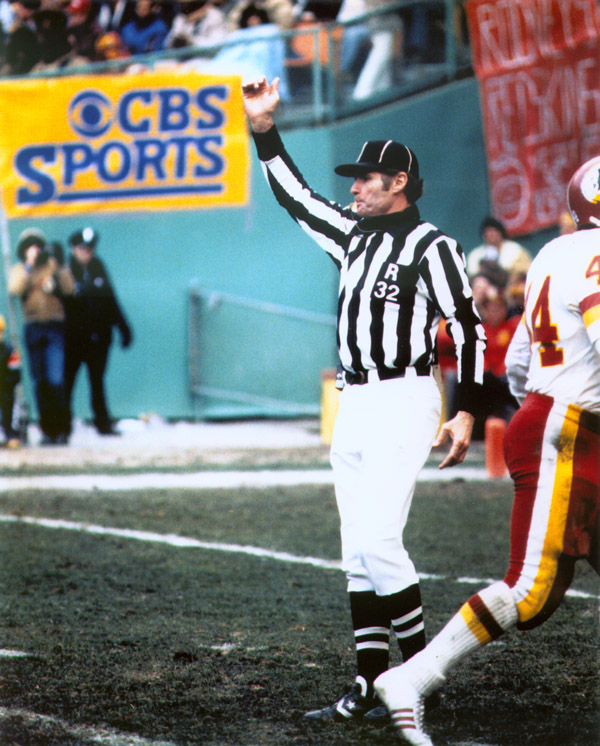
Many basketball players bounce the ball a number of times (usually 2-3-4) before shooting a free throw. Baseball players step on a base bag, others step over the foul line – not “on” it – when running to their positions. As an NFL referee, after the coin toss, as I would take my kickoff position in the end zone, I would stand with my back to the goal post and tap it with my hands behind me! Was it for “luck” or just reminding me to focus on my task at hand? http://www.sportssuperstitions.net/
Most teams say prayers before a game. Are they asking God to help them win or to help them play better or just to play free of injury? Does praying help? If Notre Dame http://und.cstv.com/, a Catholic University, is playing Boston College http://www.bc.edu/, also Catholic, and both teams/schools use similar prayers for victory -- how does God decide whom to help? Or Notre Dame vs. Brigham Young University ,http://www.byucougars.com/ a Mormon school, does God play “religious favorites?” I love the story about a Rabbi and a Catholic Priest at a baseball game. As the batter stepped into the batter’s box, he crossed himself, (made the sign of the cross); the Rabbi said to the Priest, “Does that help?” The Priest replied, “Not if he can’t hit!”
Is prayer considered a “superstition?” The opinion here is that prayer is talking to yourself through God – whoever you determine God to be – to help you pull together all your inner strengths in order to give your best performance. Does God really care if you “win?” God has a lot more to do than care whether or not you win! Superstitions, including even prayer, provide you with a purpose, a routine – an inner strength if you will. And that word – WILL – is the key. http://www.suite101.com/article.cfm/new_thought/109108
In every performance – be it dancing, singing, playing an instrument or in sports, focus is the key; assuming, of course, that you have done all the necessary preparation to be ready – physically and mentally - to give your best effort.
Will you practice a routine – “game plan” if you will – to focus on giving your best performance?
Friday, October 17, 2008
On The Tunney Side of the Street #199, Oct. 20, 2008 (www.JimTunney.com)
The recent physical altercation between Dallas Cowboys Safety Adam Jones (aka “Pacman”) and his bodyguard in a Dallas hotel at 1:30 AM (note: “Nothing good happens after midnight,” see page 55 in “It’s the Will, Not the Skill”) induced Jones’ indefinite suspension by NFL Commissioner Roger Goodell (http://sports.espn.go.com/nfl/news/story?id=3646257&campaign=rss&source=NFLHeadlines). Tim Montgomery, former Olympic Gold medalist and world record holder (at 9.78 seconds in the 100 meters) was recently found guilty for heroin dealing. Montgomery is already in prison, completing a 46-month sentence for “check-kiting.” http://nbcsports.msnbc.com/id/24418822/ He fathered 4 children with 4 different women – one of whom was Marion Jones, the disgraced Olympic sprinter star, who also was stripped of her Gold medals, after being found guilty of using steroids. http://nbcsports.msnbc.com/id/21138883/
Tammy Thomas, former elite cyclist, recently was sentenced to six months home confinement for lying to the Grand Jury about her steroid use (http://cgi.cnnsi.com/2008/more/10/10/doping.thomas.ap/index.html). And, of course, former San Francisco Giants home run king Barry Bonds, who pleaded not guilty to 15 similar charges, is due in court next March with his six attorneys for alleged steroid use and perjury. Then we have the recent conviction for kidnapping, robbery and assault with a deadly weapon, amongst other charges, for former NFL Hall of Famer O.J. Simpson (http://ap.google.com/article/ALeqM5iUNgbOr-2bnpFUX0MiII6je2CkRAD93QJK380). This brings a question to the forefront: Are those mentioned above-sports stars or athletes? How do you define “athlete?”
No disputing the physical prowess of Montgomery, Jones, Bonds, and/or Simpson, but, wait - this is NOT about them; they are merely today’s examples of how sports performers have squandered their talents and acclaim (along with the money that came with it) as well as disgraced themselves. No, this is about the question: Do these – and other sports performers who have fallen from grace – meet the criteria as “athletes” or are they merely “physically talented?”
Most dictionaries define “athlete” as: “one trained to compete in athletics involving exercises and games requiring physical skills.” No doubt that those named above qualify as “athletes” by that singular definition. But not in MY dictionary! I have been taught, and always believed, the definition of “athlete” embodies more than just “physical skills.” The following dozen attributes incorporate my definition of an athlete:
· Positive mental attitude
· Being a T.E.A.M. player
· Willingness to go the “extra mile”
· The Will to win (remember “It’s the Will, Not the Skill”)
· Loyalty
· Dedication
· Accountability
· Integrity
· Enthusiasm
· Trustworthiness
· Coachability
· Physical skills
Will you measure your sports stars as athletes only if they possess these characteristics?
Monday, August 25, 2008
On The Tunney Side of the Street #191, August 25, 2008 (www.JimTunney.com)
After Further Review ... A potpourri of observations from the 2008 Olympic Games:
The Government of China pulled out all the 'stops' to impress the television world of how important the Olympic Games meant to them. I'm not sure it meant that much to the "man on the street," but the country has to be proud, especially with all the Gold medals won by the Chinese athletes(http://en.beijing2008.cn/).
Michael Phelps' 8 Gold medals did himself, his mother Debbie, and the U.S.A. proud as well (http://www.michaelphelps.com/)! I hope young athletes appreciated the dedication and commitment of Phelps. When a competitor openly announces goals, then competes at the highest level to achieve them, the remarkableness of that feat can only be applauded. Further, Phelps' humility during the plethora of interviews that followed demonstrated his appreciation of his teammates, as well as respect for his competitors. One has to admire that.
However, in events that called for subjective judgment, politics always seem to "pop up." Questionable subjective judgment is not new, but certainly was evident in Women's Gymnastics, especially the Uneven Bars, where China's He Kexin and Nastia Liukin tied (the same score of 16.727) for the top mark, yet Kexin received the Gold and Liukin the Silver on the Olympic "tie-breaker system." Why not both getting Gold medals? Such was the case in the 1988 Olympics when Valeri Liukin, Nastia's father, tied for first in the Men's Horizontal Bar with both competitors being awarded Gold medals. The judges didn't knock Nastia out of the Gold - the tie-breaker system did (http://www.chron.com/disp/story.mpl/hotstories/5952127.html). What if Milorad Cavic and Phelps simultaneously touched the timing pads in the 100 meter 'fly'? Wouldn't have both been awarded Gold medals?
Usain Bolt's (http://www.nbcolympics.com/athletes/athlete=271/bio/) pounding of his chest before crossing the finish line in his 100 meter heat in track might have drawn a 15-yard penalty in the NFL for taunting. It's no disgrace to get beat by someone of Bolt's talent, but his tasteless behavior is discomforting to his competitors, as well as the audience.
It was a sad day when the International Olympic Committee (http://www.olympic.org/uk/index_uk.asp)decided to eliminate Women's Softball and Men's Baseball. Was it because of the USA's dominance? If so, politics, again, rears its ugly head. At one time USA's Men's Basketball was dominant, even embarrassing, to other countries. Since we sent our U.S. coaches to other countries, the competition has (somewhat) leveled itself out.
Olympic competition was designed to have athlete compete against athlete or T.E.A.M. against T.E.A.M. The counting of medals by countries only exacerbates the "I'm better than you attitude" between nations that are already at odds. (http://results.beijing2008.cn/WRM/ENG/INF/GL/95A/GL0000000.shtml)
Will you look at Olympic competition as an individual vs. individual basis?
For more information about Jim Tunney, please visit his website:www.JimTunney.com, or if you would like to respond to this message, please send your email to Jim@JimTunney.comYou can also visit Jim's blog at: http://jimtunney.blogspot.comA new book "The Encore Effect" by Mark Sanborn, speaker/authorVisit www.MarkSanborn.com/moreencores for more information.
Saturday, August 2, 2008
On The Tunney Side of the Street #184 - July 7, 2008
On the Tunney Side of the Street #184 - July 7, 2008
After Further Review .... The 2008 Olympic Games open one month from tomorrow, 08-08-08 in Beijing, China, with a lot of excitement and anticipation that the USA will be triumphant over our competitive countries. While I fully support our athletes and want them to do well, it appears to me – it has for many Olympic Games now – that we have let the “Spirit” of the Olympics get away from us.
“Citius, Altius, Fortius” -- interpreted to mean swifter, higher, stronger -- has always been the Olympic motto. The games were designed to compare INDIVIDUAL ATHLETICISM – not country competition. Most countries (not just the USA) want to “stack up” their country’s scores against other countries (i.e. country vs. country, not athlete vs. athlete). The Olympic Creed of “The essential thing is not to have conquered, but to have fought well” has been lost.
Enter the US Olympic Mens Basketball T.E.A.M. Being a team sport in itself takes away from the individual competition. Now, don’t get ahead of me here – I like the T.E.A.M. concept and countries should put their best team forward. But the US Olympic Mens Basketball T.E.A.M. is made up of NBA players – professionals!
You may recall that the great athlete Jim Thorpe had his Olympic Gold medals in the Decathlon and Pentathlon 1912 Olympics taken away because it was later discovered that Thorpe had played on, and received money from, a professional baseball team. In today’s Olympic competition, most of the players from every country are paid. USA began playing professionals in the Olympics when it was discovered we were sending our best amateur players, but facing professionals from other countries.
We should send our best athletes, but why not our best amateurs to maintain the “Spirit” of the games. Sixteen years ago, the first “DREAM TEAM” comprised of NBA players wanted 5-star treatment by living in luxurious hotels and not in the Olympic Village. Granted the Olympic Village was “spartan” compared to what these professional athletes were used to, but the value of being together in an Olympic environment was lost – and so did the Dream Team.
Further, the selection of Denver Nugget’s star Carmelo Anthony to the Olympic basketball team is suspect. Anthony certainly is one of the more talented players. However, the Nugget’s suspended “Melo” for 2 games, starting the 2008-2009 NBA season, when he was recently arrested after “pleading guilty to driving while impaired” (DUI). If the Nugget’s felt it necessary to take this aggressive action, why didn’t the Olympic Team do likewise? In sending our “Best Athletes,” it is important to incorporate character along with athleticism.
Will you support the Olympic Games that comprise the best amateurs strong in character as well as athleticism?
For more information about Jim Tunney, please visit his website:
www.JimTunney.com, or if you would like to respond to this message, please send your email to Jim@JimTunney.com
Subscribe to:
Posts (Atom)

 Posts