Showing posts with label TEAM. Show all posts

Sunday, September 21, 2008

On The Tunney Side of the Street #195, Sept. 22, 2008 (www.JimTunney.com)


On the Tunney Side of the Street #195, September 22, 2008

After Further Review … Stephen Covey, author of “Seven Habits of Effective People,” and “The 8th Habit: from Effectiveness to Greatness,” teaches three guidelines for effective collaboration – read: TEAMWORK. http://www.stephencovey.com/

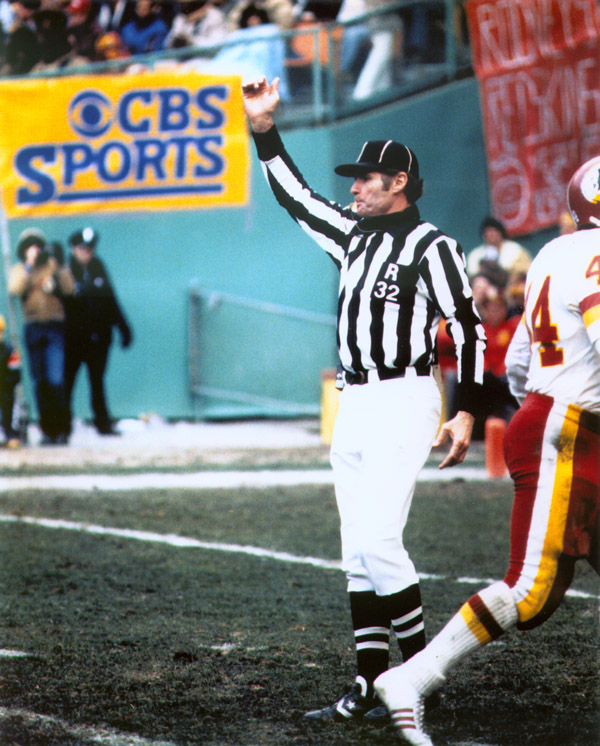
They are: 1) Establish your mission; 2) Set the ground rules; and 3) Identify each member’s strengths. Nothing new here. However, it recalled for me how the NFL officiating crew of seven, of which I was the “crew chief,” strived to be more effective (read: Perfect) on the field every game. See how these apply to you and how you can utilize them each day.

1) Establish your mission. My book “Impartial Judgment” could have been titled “’Cause I Don’t Care Who Wins.” http://www.jimtunney.com/products.html. The mission of each NFL crew is to officiate all 60 minutes of every game without prejudice and mistake-free! Does this put extra pressure on each member of the crew? Not necessarily. Pressure keeps one focused and can be managed when every one is prepared – mentally and physically. The questions are: a) did each one do his homework thoroughly by studying the Rule Book? And b) did everyone physically workout each day to be in game conditioning?

2) Set the ground rules. Each week, before the next game, every official – by himself, as well as with his crew, studies the game film of their previous week’s game looking for ways to improve. Each crew member must be honest to admit a blown call, a missed play, and that he was in the right position to make the call (called mechanics). Only when officials learn from their mistakes will improvement take place. These ground rules help the crew seek perfection. Another important ground rule is to be professional on the field, friendly and courteous, but not “buddy, buddy” with players or coaches.

3) Identify each member’s strengths. It is vital that each official is placed in an on-field position e.g. R, U, HL, LJ, SJ, FJ or BJ, which utilizes his physical and mental strengths to the utmost. While the major responsibility of enforcing the penalty for a foul, for example, is placed on the referee (white hat), it is essential for the effectiveness of the crew, and of course, for the game itself that every official learn, know and ensure that every penalty is properly enforced. And finally, while the strength of a crew depends on the strength of the individual, it is the willingness of each to help another T.E.A.M. member. Teamwork – call it chemistry – is crucial to the success of the game.


Will you practice these suggestions to help your T.E.A.M. move from effectiveness to greatness?


For more information about Jim Tunney, please visit his website:
www.JimTunney.com, or if you would like to respond to this message,
please send your email to Jim@JimTunney.com

Sunday, August 3, 2008

On The Tunney Side of the Street #188 - August 4, 2008

On the Tunney Side of the Street #188, August 4, 2008

After Further Review … All 32 National Football League teams opened their 2008 training camps the third week in July with less than one-half of those drafted in the first round signing their contracts. The others had not signed by the day the camps opened. Oh, they will … but when?

How in the world can a first round draft pick, whose salary and signing bonus -- much of it guaranteed in the multi-millions -- delay getting started? Coaches tell me that it is VITAL for rookies to begin-at-the-beginning. The transition from the college game to the NFL is enormous. Who do these Rookies think they are, anyway? Some of the first rounders will be out of the NFL in a year or two – mostly because they didn’t make it!

Veteran players in today’s NFL games are hesitant to criticize “holdouts,” nor do they even seem to want to encourage their brethren to report to training camp on time. That same thinking is also present with today’s players who fail to admonish teammates for “show boating.” Players often just look the other way, as they did in ignoring the poor behavior of the likes of Michael Vick and Pacman Jones. A teammate's leadership might have saved those two – and others – for the fate that befell them.

Holdouts are not new. Players have “held out” for many years. Jerry Kramer, All-pro Green Bay Packers Guard in the 1960’s said that when he “negotiated’ with Head Coach Vince Lombardi, he wanted $27,000 to play in his 11th season – that was his total salary; no bonuses. Lombardi would only go for $26,500. Kramer held out; Lombardi finally agreed to $27,000, but that was in June and not a day of training camp was missed.

The 2008 NFL draft was in April. Why didn’t negotiations begin in early May? Well, often players in the first round wait to see what other first rounders are getting to compare their offers. Thus, it has become “play for the money” and not for the love of the game as it was in Kramer’s day.

Agents play such a dominant role in the holdout. The agent, of course, is the player’s main negotiator and, as such, has that player’s attention. The unfortunate issue is that a determined, often truculent, agent fails to see the value of reporting on-time to training camp. The value is two-fold: 1) the conditioning and timing of each player in concert with his team and 2) the camaraderie that is necessary for the chemistry needed to build a T.E.A.M. (Together Everyone Accomplishes More).


Will you give your best to help build your T.E.A.M. chemistry?


For more information about Jim Tunney, please visit his website:
www.JimTunney.com, or if you would like to respond to this message,
please send your email to Jim@JimTunney.com

Saturday, August 2, 2008

On The Tunney Side of the Street #187, July 28, 2008

On the Tunney Side of the Street #187 July 28, 2008

After Further Review .... “When are these idiots going to learn? They continue to think they can beat the system. They’re wrong,” said Pat McQuaid, International Cycling Union Leader. McQuaid was referring to cyclist racer Manuel Beltran, who tested positive for EPO – the performance enhancement drug. Beltran was instantly kicked out of the Tour de France and suspended by his T.E.A.M.

Beltran, who rode alongside Lance Armstrong as one of the U.S. Postal Cyclists for 3 years, is not alone. Three of his teammates, all former Postal riders during Armstrong’s seven Tour victories, also failed doping tests. Italy’s Riccardo Ricco, winner of two stages in the 2008 Tour, tested positive after the fourth stage and was busted. What part of the word T.E.A.M. don’t these “idiots” understand? How can they believe they can “beat the system?”

Michael Rasmussen, Iban Mayo, and Floyd Landis, have either been “kicked out,” stripped of their racing titles, and/or tested positive. Moises Deunas Nevado, a 27 year old Spaniard who was 19th overall after the 4th stage, was ousted when the “lure of glory” seemed to be stronger than just doing the right thing. But let’s not focus solely on Tour de France racing.

For “beating the system,” let’s start with former NBA Referee, Tim Donaghy, who pleaded guilty to a scandal involving betting on NBA games he officiated. Where does loyalty to your T.E.A.M. come into play? Plenty has been said about the NFL’s Michael Vick and Adam (Pacman) Jones trying to beat the system. And let’s not leave out former Olympic sprinter Marion Jones, now serving a 6-month prison sentence for using EPO, then lying about it to the Feds. The question is: if you think you can “beat the system,” but run the risk of NOT, would it ever occur to you that you not only put yourself in harm’s way, but also your colleagues, friends - and your family!

On a personal note, I was always concerned (“afraid” is a more apt word) that stepping over that line would embarrass my family and the good name they had established. In my book, “It’s the Will, Not the Skill” dedicated to Coach Herm Edwards’ parents, Herman Sr., cautioned Herm by saying “Son, I can’t give you lots of money or a fancy home, but I can give you a good name. Use it wisely.” Herm has.

“Use it wisely” – can we tell them that -- not just athletes who make, or stand to make, a lot of money, but especially kids – either ones in our family or the ones we coach?

Will you live up to the Edwards’ code that says “Just do the right thing?”


For more information about Jim Tunney, please visit his website:
www.JimTunney.com, or if you would like to respond to this message,
please send your email to Jim@JimTunney.com