After Further Review … The Tennessee Titans (http://www.titansonline.com/) have been the AFC South’s most productive – in terms of wins/losses – this 2008 NFL season. Their impressive, undefeated record of 10 wins and 0 losses is a rare happening in the parity that the NFL hopes to accomplish with its draft system. Impressive – until the New York Jets (http://www.newyorkjets.com/), with new-found leadership in QB Brett Favre (http://www.nfl.com/players/brettfavre/profile?id=FAV540222), showed up in Nashville (home of the Titans) and beat them 34-13 in the 12th week.
That same weekend, our local community college T.E.A.M. was playing a Bowl game with an equally impressive 10-0 record. An upstart opponent won that game 33-31. So the NFL Titans and our college T.E.A.M., both 10-1, didn’t go through the season undefeated. A shame!
Or is it? Well, for starters every T.E.A.M. wants to win the “last one.” For the Titans, they have more to go – so winning the last one is still a possibility. For those college players, whose season is over and have worked more hours than one cares to count, what is next? Is losing a game all that important? Sure it hurts, but you need to realize that it can, and will, strengthen you. You can learn as much from losing as you can from winning. Maybe more!
When we win, we don’t seem to take our time and effort to analyze why we won, ensuring that our next effort will show improvement. Yet when we lose, we spend countless hours analyzing why we lost.
“Success doesn’t always go to the stronger or faster man, but more often goes to the one who thinks he can” – so goes the poem. When you win, you believe you will always win. Losing, however, can create doubt about your ability to win again. That is the essence of sports – believing in your ability to be successful. If sports teaches anything – and I strongly believe it does – its value lies in 3 areas: 1) learning to believe in yourself and your abilities; 2) learning to bounce back from defeat; and 3) learning to work with others for the good of the T.E.A.M. Winning is a mindset!
“You play to win the game” is dominant in my book, It’s the Will, Not the Skill. Winning streaks are nice for the ego and promote bragging rights; fun as long as it lasts, but life goes on. It is easy to be victimized by those glory days. While you must believe you can – and will – win, you must also be able to handle a setback and not lose your confidence. Learning how to deal with losing, and learning how to move on is an important characteristic of a “winner.”
Will you develop the mindset of a winner?
For more information about Jim Tunney, please visit his website:
www.JimTunney.com, or if you would like to respond to this message, please send your email to Jim@JimTunney.com
Showing posts with label leadership. Show all posts
Showing posts with label leadership. Show all posts
Tuesday, December 2, 2008


Sunday, September 21, 2008
On The Tunney Side of the Street #195, Sept. 22, 2008 (www.JimTunney.com)
On the Tunney Side of the Street #195, September 22, 2008
After Further Review … Stephen Covey, author of “Seven Habits of Effective People,” and “The 8th Habit: from Effectiveness to Greatness,” teaches three guidelines for effective collaboration – read: TEAMWORK. http://www.stephencovey.com/
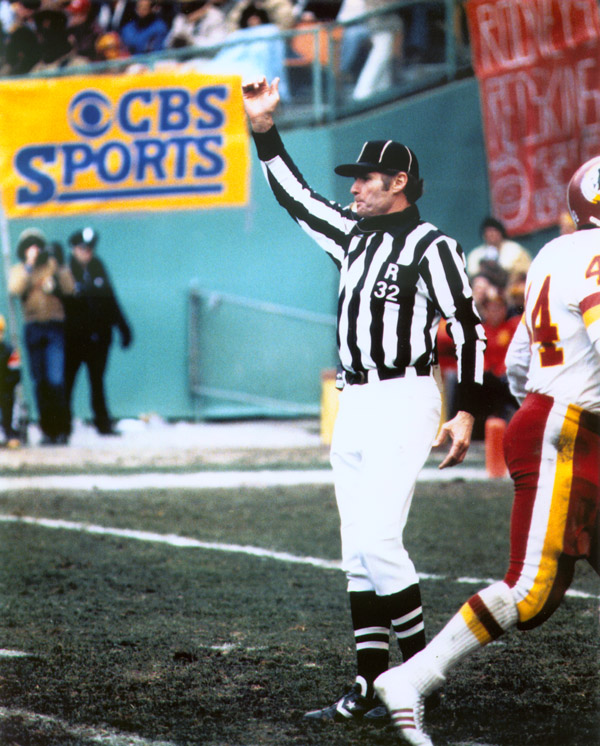
They are: 1) Establish your mission; 2) Set the ground rules; and 3) Identify each member’s strengths. Nothing new here. However, it recalled for me how the NFL officiating crew of seven, of which I was the “crew chief,” strived to be more effective (read: Perfect) on the field every game. See how these apply to you and how you can utilize them each day.
1) Establish your mission. My book “Impartial Judgment” could have been titled “’Cause I Don’t Care Who Wins.” http://www.jimtunney.com/products.html. The mission of each NFL crew is to officiate all 60 minutes of every game without prejudice and mistake-free! Does this put extra pressure on each member of the crew? Not necessarily. Pressure keeps one focused and can be managed when every one is prepared – mentally and physically. The questions are: a) did each one do his homework thoroughly by studying the Rule Book? And b) did everyone physically workout each day to be in game conditioning?
2) Set the ground rules. Each week, before the next game, every official – by himself, as well as with his crew, studies the game film of their previous week’s game looking for ways to improve. Each crew member must be honest to admit a blown call, a missed play, and that he was in the right position to make the call (called mechanics). Only when officials learn from their mistakes will improvement take place. These ground rules help the crew seek perfection. Another important ground rule is to be professional on the field, friendly and courteous, but not “buddy, buddy” with players or coaches.
3) Identify each member’s strengths. It is vital that each official is placed in an on-field position e.g. R, U, HL, LJ, SJ, FJ or BJ, which utilizes his physical and mental strengths to the utmost. While the major responsibility of enforcing the penalty for a foul, for example, is placed on the referee (white hat), it is essential for the effectiveness of the crew, and of course, for the game itself that every official learn, know and ensure that every penalty is properly enforced. And finally, while the strength of a crew depends on the strength of the individual, it is the willingness of each to help another T.E.A.M. member. Teamwork – call it chemistry – is crucial to the success of the game.
Will you practice these suggestions to help your T.E.A.M. move from effectiveness to greatness?
For more information about Jim Tunney, please visit his website:
www.JimTunney.com, or if you would like to respond to this message,
please send your email to Jim@JimTunney.com
Sunday, August 3, 2008
On The Tunney Side of the Street #188 - August 4, 2008
On the Tunney Side of the Street #188, August 4, 2008
After Further Review … All 32 National Football League teams opened their 2008 training camps the third week in July with less than one-half of those drafted in the first round signing their contracts. The others had not signed by the day the camps opened. Oh, they will … but when?
How in the world can a first round draft pick, whose salary and signing bonus -- much of it guaranteed in the multi-millions -- delay getting started? Coaches tell me that it is VITAL for rookies to begin-at-the-beginning. The transition from the college game to the NFL is enormous. Who do these Rookies think they are, anyway? Some of the first rounders will be out of the NFL in a year or two – mostly because they didn’t make it!
Veteran players in today’s NFL games are hesitant to criticize “holdouts,” nor do they even seem to want to encourage their brethren to report to training camp on time. That same thinking is also present with today’s players who fail to admonish teammates for “show boating.” Players often just look the other way, as they did in ignoring the poor behavior of the likes of Michael Vick and Pacman Jones. A teammate's leadership might have saved those two – and others – for the fate that befell them.
Holdouts are not new. Players have “held out” for many years. Jerry Kramer, All-pro Green Bay Packers Guard in the 1960’s said that when he “negotiated’ with Head Coach Vince Lombardi, he wanted $27,000 to play in his 11th season – that was his total salary; no bonuses. Lombardi would only go for $26,500. Kramer held out; Lombardi finally agreed to $27,000, but that was in June and not a day of training camp was missed.
The 2008 NFL draft was in April. Why didn’t negotiations begin in early May? Well, often players in the first round wait to see what other first rounders are getting to compare their offers. Thus, it has become “play for the money” and not for the love of the game as it was in Kramer’s day.
Agents play such a dominant role in the holdout. The agent, of course, is the player’s main negotiator and, as such, has that player’s attention. The unfortunate issue is that a determined, often truculent, agent fails to see the value of reporting on-time to training camp. The value is two-fold: 1) the conditioning and timing of each player in concert with his team and 2) the camaraderie that is necessary for the chemistry needed to build a T.E.A.M. (Together Everyone Accomplishes More).
Will you give your best to help build your T.E.A.M. chemistry?
For more information about Jim Tunney, please visit his website:
www.JimTunney.com, or if you would like to respond to this message,
please send your email to Jim@JimTunney.com
After Further Review … All 32 National Football League teams opened their 2008 training camps the third week in July with less than one-half of those drafted in the first round signing their contracts. The others had not signed by the day the camps opened. Oh, they will … but when?
How in the world can a first round draft pick, whose salary and signing bonus -- much of it guaranteed in the multi-millions -- delay getting started? Coaches tell me that it is VITAL for rookies to begin-at-the-beginning. The transition from the college game to the NFL is enormous. Who do these Rookies think they are, anyway? Some of the first rounders will be out of the NFL in a year or two – mostly because they didn’t make it!
Veteran players in today’s NFL games are hesitant to criticize “holdouts,” nor do they even seem to want to encourage their brethren to report to training camp on time. That same thinking is also present with today’s players who fail to admonish teammates for “show boating.” Players often just look the other way, as they did in ignoring the poor behavior of the likes of Michael Vick and Pacman Jones. A teammate's leadership might have saved those two – and others – for the fate that befell them.
Holdouts are not new. Players have “held out” for many years. Jerry Kramer, All-pro Green Bay Packers Guard in the 1960’s said that when he “negotiated’ with Head Coach Vince Lombardi, he wanted $27,000 to play in his 11th season – that was his total salary; no bonuses. Lombardi would only go for $26,500. Kramer held out; Lombardi finally agreed to $27,000, but that was in June and not a day of training camp was missed.
The 2008 NFL draft was in April. Why didn’t negotiations begin in early May? Well, often players in the first round wait to see what other first rounders are getting to compare their offers. Thus, it has become “play for the money” and not for the love of the game as it was in Kramer’s day.
Agents play such a dominant role in the holdout. The agent, of course, is the player’s main negotiator and, as such, has that player’s attention. The unfortunate issue is that a determined, often truculent, agent fails to see the value of reporting on-time to training camp. The value is two-fold: 1) the conditioning and timing of each player in concert with his team and 2) the camaraderie that is necessary for the chemistry needed to build a T.E.A.M. (Together Everyone Accomplishes More).
Will you give your best to help build your T.E.A.M. chemistry?
For more information about Jim Tunney, please visit his website:
www.JimTunney.com, or if you would like to respond to this message,
please send your email to Jim@JimTunney.com
Subscribe to:
Posts (Atom)

 Posts
Posts